Use the our online Merriam-Webster medical dictionary.
eMedicine Journal > Pediatrics > Genetics And Metabolic Disease
Alkaptonuria

Synonyms, Key Words, and Related Terms: ochronosis, alcaptonuria, homogentisuria, dark urine, inborn error of metabolism, IEM, Croonian lectures, abnormal intermediate, homogentisic acid oxidase, homogentisate, vitamin C, arthritis, osteoarthritis, rheumatoid arthritis, ankylosis, dark stained diapers
Author Information | Introduction | Clinical | Differentials | Workup | Treatment | Medication | Follow-up | Miscellaneous | Test Questions | Bibliography

AUTHOR INFORMATION Section 1 of 11    Click here to go to the top of this page Click here to go to the next section in this topic

Authored by Karl S Roth, MD, Chair, Professor, Department of Pediatrics, Creighton University School of Medicine

Karl S Roth, MD, is a member of the following medical societies: Alpha Omega Alpha, American Academy of Pediatrics, American Association for the Advancement of Science, American College of Nutrition, American Pediatric Society, American Society for Clinical Nutrition, American Society of Nephrology, Association of American Medical Colleges, Medical Society of Virginia, New York Academy of Sciences, Sigma Xi, Society for Pediatric Research, and Southern Society for Pediatric Research

Edited by James Bowman, MD, Senior Scholar of Maclean Center for Clinical Medical Ethics, Professor Emeritus, Department of Pathology, University of Chicago; Robert Konop, PharmD, Director, Clinical Account Management, Ancillary Care Management, Inc; Leonard G Feld, MD, PhD, MMM, Chairman of Pediatrics, Carolinas Medical Center; Chief Medical Officer, Levine Children's Hospital, Carolinas Healthcare System; Paul D Petry, DO, FACOP, FAAP, Clinical Assistant Professor of Pediatrics, University of North Dakota, School of Medicine and Health Sciences; Consulting Staff, Altru Health System; and Bruce A Buehler, MD, Professor, Department of Pathology and Microbiology, Chairman, Department of Pediatrics, Director, Hattie B Munroe Center for Human Genetics, University of Nebraska Medical Center

Author's Email:Karl S Roth, MDClick here to view conflict-of-interest information on the author of this topic
Editor's Email:James Bowman, MD 

eMedicine Journal, July 2 2005, VOLUME 6, Number 7
INTRODUCTION Section 2 of 11   Click here to go to the next section in this topic Click here to go to the top of this page Click here to go to the next section in this topic

Background: Alkaptonuria is one of 4 disorders originally defined as an inborn error of metabolism by Archibald Garrod in his Croonian Lectures of 1902. The hallmark of the disease is passage of urine that becomes black when left standing. Garrod identified a familial pattern of inheritance and concluded that an inherited biochemical abnormality must result in the passage of an abnormal intermediate in the urine. That Garrod conceived of an intermediate is remarkable given that virtually nothing was known of serial biochemical reactions in the metabolic disposal of nutrient substances at that time.

Pathophysiology: The defect lies in the catabolic pathway of tyrosine, which contains a parahydroxylated ring structure. In a poorly understood complex reaction, the enzyme phenylpyruvic acid oxidase is thought simultaneously to move the pyruvic acid side chain, to decarboxylate it, and to add an additional hydroxyl group to the ring. The product, homogentisic acid, is actually ortho-meta-dihydroxyphenylacetic acid. A deficiency of the hepatic enzyme homogentisate 1,2-dioxygenase(HGO)forces the accumulation of homogentisic acid, which is rapidly cleared in the kidney and excreted.

Upon contact with air, homogentisic acid is oxidized to form a pigmentlike polymeric material responsible for the black color of standing urine. Although homogentisic acid blood levels are kept very low through rapid kidney clearance, over time homogentisic acid is deposited in cartilage throughout the body and is converted to the pigmentlike polymer through an enzyme-mediated reaction that occurs chiefly in collagenous tissues. As the polymer accumulates within cartilage, a process that takes many years, the normally transparent tissues become slate blue, an effect ordinarily not seen until adulthood.

The earliest sign of the disorder is the tendency for diapers to stain black. Throughout childhood and most of early adulthood, an asymptomatic, slowly progressive deposition of pigmentlike polymer material into collagenous tissues occurs.

In the fourth decade of life, external signs of pigment deposition, called ochronosis, begin to appear. The slate blue, gray, or black discoloration of sclerae and ear cartilage is indicative of widespread staining of the body tissues, particularly cartilage. The hips, knees, and intervertebral joints are affected most commonly and show clinical symptoms resembling rheumatoid arthritis. Because of calcifications that occur in these sites, however, the radiologic picture is more consistent with osteoarthritis.

Despite many speculations that this polymer deposition is associated with cardiac pathology, no reports of mortality directly related to the homozygous state for alkaptonuria exist. Reports exist of calcification and stenosis of the aortic annulus leading to coronary artery disease, and the risk of myocardial infarction is higher than normal in older patients with ochronosis.

Molecular analysis of the HGO gene shows a wide spectrum of mutation. Although no correlation has so far been made between the molecular nature of the HGO mutation and its clinical phenotype, the wide variability of mutational phenomena could certainly help explain the clinical variability in this disease. Approximately 70 separate mutations have thus far been reported.

Frequency:

Mortality/Morbidity: Life expectancy is normal; however, associated morbidity can be significant. Early involvement of the intervertebral discs at the thoracic and lumbar levels is very common, occurring in approximately 50% of affected individuals. Typically, significant back pain begins from age 30 years. The large joints (knee, shoulder and hip) are very frequently involved; at least half of all patients undergo joint replacement by their mid 50s. Achilles tendon involvement is also common and may result in tearing. Involvement of the aortic and/or mitral valve leaflets is common, and calcifications of the coronary arteries occurs in half of all patients prior to age 60.

Sex:

Age:

CLINICAL Section 3 of 11   Click here to go to the next section in this topic Click here to go to the top of this page Click here to go to the next section in this topic

History:

Physical:

Causes:

DIFFERENTIALS Section 4 of 11   Click here to go to the next section in this topic Click here to go to the top of this page Click here to go to the next section in this topic

Mitral Valve Insufficiency
Porphyria, Acute


Other Problems to be Considered:

Aortic stenosis, rheumatic
Osteoarthritis
Mitral stenosis, rheumatic

WORKUP Section 5 of 11   Click here to go to the next section in this topic Click here to go to the top of this page Click here to go to the next section in this topic

Lab Studies:

Imaging Studies:

Other Tests:

Procedures:

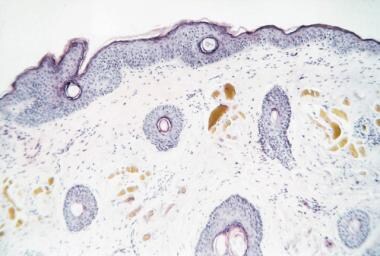
Histologic Findings: In association with the gross visual finding of black-stained cartilage in various areas of the body (eg, larynx, costochondral junctions, trachea), microscopic examination reveals pigment deposition within and outside cells in these tissues. No specific stain is available to distinguish homogentisate-derived pigment from melanin, and the 2 compounds have very similar solubility characteristics.

TREATMENT Section 6 of 11   Click here to go to the next section in this topic Click here to go to the top of this page Click here to go to the next section in this topic

Medical Care:

Surgical Care:

Consultations:

Diet:

MEDICATION Section 7 of 11   Click here to go to the next section in this topic Click here to go to the top of this page Click here to go to the next section in this topic

No medications are known to be useful in managing alkaptonuria. Vitamin C, up to 1 g/d, is recommended for older children and adults.

Drug Category: Vitamins -- Organic substances required by the body in small amounts for various metabolic processes.
Drug Name
Ascorbic acid (Cecon, Cevalin, Cevi-Bid, Ce-Vi-Sol) -- The mild antioxidant nature of ascorbic acid helps to retard the process of conversion of homogentisate to the polymeric material that is deposited in cartilaginous tissues.
Adult Dose1 g/d PO
Pediatric DoseOlder children: 1 g/d PO
ContraindicationsPregnancy, if large doses administered
InteractionsDecreases effects of warfarin and fluphenazine; increases aspirin levels
Pregnancy A - Safe in pregnancy
PrecautionsPregnancy category C with prolonged use of doses greater than RDA for pregnancy (ie, >80-85 mg/d), the fetus adapts to high vitamin C levels resulting in scorbutic condition following birth; prolonged high doses may cause renal calculi, especially in people with diabetes; patient on sodium restrictive diet or taking anticoagulants should not take large doses (ie, > 1 g) for prolonged periods
Drug Category: Enzyme inhibitors
Drug Name
Nitisinone (Orfadin) -- This compound has seen very restricted use in experimental treatment. It is an inhibitor of the enzyme 4-hydroxyphenylpyruvate dioxygenase, which mediates formation of homogentisic acid.
Adult Dose0.35 mg twice a day PO
Pediatric DoseN/A
ContraindicationsHypersensitivity
InteractionsN/A
Pregnancy C - Safety for use during pregnancy has not been established.
PrecautionsElevated serum tyrosine; corneal toxicity
FOLLOW-UP Section 8 of 11   Click here to go to the next section in this topic Click here to go to the top of this page Click here to go to the next section in this topic

Further Inpatient Care:

Further Outpatient Care:

In/Out Patient Meds:

Transfer:

Deterrence/Prevention:

Complications:

Prognosis:

Patient Education:

MISCELLANEOUS Section 9 of 11   Click here to go to the next section in this topic Click here to go to the top of this page Click here to go to the next section in this topic

Medical/Legal Pitfalls:

Special Concerns:

TEST QUESTIONS Section 10 of 11   Click here to go to the next section in this topic Click here to go to the top of this page Click here to go to the next section in this topic

CME Question 1: Which of the following is not a complication of alkaptonuria?


A: Aortic valvular stenosis
B: Hypertension
C: Calcification of the ear cartilage
D: Calcified lumbar discs
E: Ankylosis

The correct answer is B: Hypertension is not a known complication, although its presence could significantly add to the risk of myocardial infarction due to coronary artery calcification, which is typically seen in alkaptonuria before age 60.

CME Question 2: Which of the following is the preferred management of alkaptonuria?


A: Elimination of phenylalanine
B: Large doses of vitamin B-6
C: Restriction of phenylalanine and tyrosine
D: Vitamin C 1 g/d
E: Restriction of phenylalanine and tyrosine plus vitamin C 1 g/d

The correct answer is E: Reduction of phenylalanine and tyrosine reportedly reduced homogentisic acid excretion in the urine of a child. In an adult, a similar restriction reportedly had no effect on excretion of the abnormal metabolite. Whether a mild dietary restriction from early in life would avoid or minimize later complications is not known, but such an approach is reasonable. Administration of vitamin C, up to 1 g/d, is recommended for older children and adults.

Pearl Question 1 (T/F): A frequent early sign of alkaptonuria is darkened cartilage of the ear.

The correct answer is False: The earliest sign of the disorder is the tendency for diapers to stain black when left standing. Throughout childhood and most of early adulthood, an asymptomatic, slowly progressive deposition of polymer pigment material into collagenous tissues is observed.

Pearl Question 2 (T/F): In alkaptonuria, the typical and highly suggestive radiograph finding in the lumbar spine is kyphoscoliosis.

The correct answer is False: Spinal radiographs of patients with alkaptonuria reveal disk degeneration combined with dense calcification, particularly in the lumbar area.

Pearl Question 3 (T/F): The only useful therapeutic agent in alkaptonuria is vitamin C.

The correct answer is False: Administration of vitamin C, up to 1 g/d, is recommended for older children and adults. No other known medications are useful in treating patients with alkaptonuria, although experimental trials of an enzyme inhibitor(nitisinone) to reduce production of homogentisic acid are ongoing.

Pearl Question 4 (T/F): The most serious potential long-term consequence of alkaptonuria is arthritic joint disease.

The correct answer is False: Aortic stenosis secondary to ochronosis of the aortic valve is the most serious potential complication of alkaptonuria. A further consequence, as for aortic stenosis of any etiology, is the potential for coronary artery insufficiency. However, most patients eventually require major joint replacements.
BIBLIOGRAPHY Section 11 of 11   Click here to go to the next section in this topic Click here to go to the top of this page

NOTE:
Medicine is a constantly changing science and not all therapies are clearly established. New research changes drug and treatment therapies daily. The authors, editors, and publisher of this journal have used their best efforts to provide information that is up-to-date and accurate and is generally accepted within medical standards at the time of publication. However, as medical science is constantly changing and human error is always possible, the authors, editors, and publisher or any other party involved with the publication of this article do not warrant the information in this article is accurate or complete, nor are they responsible for omissions or errors in the article or for the results of using this information. The reader should confirm the information in this article from other sources prior to use. In particular, all drug doses, indications, and contraindications should be confirmed in the package insert. FULL DISCLAIMER
eMedicine Journal, July 2 2005, VOLUME 6, Number 7
© Copyright 2001, eMedicine.com, Inc.

eMedicine Journals > Pediatrics > Genetics And Metabolic Disease > Alkaptonuria
Please email us with any comments you have on our new chapter format.
 
Use the our online Merriam-Webster medical dictionary.