Use the our online Merriam-Webster medical dictionary.
eMedicine Journal > Pediatrics > Oncology
Acute Lymphoblastic Leukemia

Synonyms, Key Words, and Related Terms: acute lymphocytic leukemia, acute lymphatic leukemia, acute lymphoid leukemia, ALL, pediatric cancer, childhood cancer, childhood malignancy, inherited genetic syndromes, lymphoblastic leukemia, leukemia, leukemic blasts, T cell, T-cell ALL, B cell, B-lineage ALL, BCR-ABL, MLL, high-risk ALL, exposure to ionizing radiation, exposure to electromagnetic fields, allogeneic hematopoietic stem cell transplantation, HSCT, bone marrow failure, anemia, thrombocytopenia, neutropenia, petechiae, bleeding, lymphadenopathy, hepatosplenomegaly, bone pain
Author Information | Introduction | Clinical | Differentials | Workup | Treatment | Medication | Follow-up | Miscellaneous | Test Questions | Pictures | Bibliography

AUTHOR INFORMATION Section 1 of 12    Click here to go to the top of this page Click here to go to the next section in this topic

Authored by Noriko Satake, MD, Clinical Fellow, Department of Pediatric Hematology-Oncology, Mattel Children’s Hospital at University of California at Los Angeles

Coauthored by Kathleen Sakamoto, MD, Professor, Department of Pediatrics, Division of Hematology-Oncology and Pathology and Laboratory Medicine, Mattel Children's Hospital, David Geffen School of Medicine, University of California at Los Angeles

Edited by Stephan A Grupp, MD, PhD, Director, Stem Cell Biology Program, Children's Hospital of Philadelphia; Assistant Professor, Department of Pediatrics, Division of Oncology, University of Pennsylvania; Mary L Windle, PharmD, Adjunct Assistant Professor, University of Nebraska Medical Center College of Pharmacy, Pharmacy Editor, eMedicine.com, Inc; Timothy P Cripe, MD, PhD, Associate Professor of Pediatric Hematology/Oncology, University of Cincinnati; Director, Translational Research Trials Office, Department of Pediatrics, Cincinnati Children's Hospital Medical Center; Samuel Gross, MD, Professor Emeritus, Department of Pediatrics, University of Florida, Clinical Professor, Department of Pediatrics, UNC, Adjunct Professor, Department of Pediatrics, Duke University; and Robert J Arceci, MD, PhD, King Fahd Professor, Division of Pediatric Oncology, Johns Hopkins University School of Medicine

Author's Email:Noriko Satake, MDClick here to view conflict-of-interest information on the author of this topic
Editor's Email:Stephan A Grupp, MD, PhD 

eMedicine Journal, July 11 2006, VOLUME 7, Number 7
INTRODUCTION Section 2 of 12   Click here to go to the next section in this topic Click here to go to the top of this page Click here to go to the next section in this topic

Background: Acute lymphoblastic leukemia (ALL) is the most common malignancy diagnosed in children, representing nearly one third of all pediatric cancers. The annual incidence of ALL is about 30 cases per million people, with a peak incidence in children aged 2-5 years. Although a few cases are associated with inherited genetic syndromes, the cause of ALL remains largely unknown.

Many environmental factors (eg, exposure to ionizing radiation and electromagnetic fields, parental use of alcohol and tobacco) have been investigated as potential risk factors, but none has been definitively shown to cause lymphoblastic leukemia. Improvements in diagnosis and treatment have produced cure rates that now exceed 80%.

Further refinements in therapy, including the use of risk-adapted treatment protocols, may improve cure rates for patients at high risk while limiting the toxicity of therapy for patients with a low risk of relapse (see Risk classification). This article summarizes advances in the diagnosis and treatment of childhood ALL.

Pathophysiology: In ALL, a lymphoid progenitor cell becomes genetically altered and subsequently undergoes dysregulated proliferation and clonal expansion. In most cases, the pathophysiology of transformed lymphoid cells reflects the altered expression of genes whose products contribute to the normal development of B cells and T cells.

Leukemic blasts have long been thought to represent the clonal expansion of hematopoietic progenitors blocked during their differentiation at discrete stages of development. Recent data challenge this theory and suggest that leukemia arises from the stem cell that acquires features of differentiated cells. Although this observation may appear to be a subtle difference, it is important because it implies the need to eradicate the leukemic stem cell, and not just the differentiated blasts, to achieve a cure. Nevertheless, leukemic blasts provide large, uniform populations of cells for molecular and functional analyses.

ALL is generally thought to arise in the bone marrow, but leukemic blasts may be systemically present at the time of presentation. They may be present in the bone marrow, thymus, liver, spleen, lymph nodes, testes, and CNS.

Frequency:

Mortality/Morbidity: Despite overall improvements in outcome, the prognosis for patients whose leukemic blast cells carry the BCR-ABL fusion created by t(9;22) or the MLL genetic rearrangements created by translocations involving 11q23 is poor. Their estimated event-free survival (EFS) is only about 30%. Until recently, allogeneic hematopoietic stem-cell transplantation (HSCT) during the first remission was believed to be the only curative treatment option for these 2 groups of patients.

However, recent data indicate heterogeneity in each group. For example, outcomes may be good in patients whose leukemic blast cells are positive for BCR-ABL fusion and whose disease has a good initial response to prednisone. In 1 study, the estimated 4-year EFS for patients with a good response to prednisone was 55%, whereas that for patients with a poor response was 10% (Schrappe, 1998). Likewise, the estimated 4-year EFS for infants with MLL rearrangements and a good prednisone response was 41%, whereas it was only 9% in those with a poor response to prednisone.

Race: ALL occurs more frequently in Caucasians than in African Americans. The annual incidence of ALL in children and adolescents younger than 15 years in the Caucasian population is 33 per million, compared with 15 per million children and adolescents younger than 15 years in the African American population.

Sex: ALL occurs slightly more frequently in boys than in girls. This difference is most pronounced for T-cell ALL.

Age: The incidence of ALL peaks in children aged 2-5 years.
CLINICAL Section 3 of 12   Click here to go to the next section in this topic Click here to go to the top of this page Click here to go to the next section in this topic

History: Children with ALL generally present with signs and symptoms that reflect bone marrow infiltration and extramedullary disease. Because leukemic blasts replace the bone marrow, patients present with signs of bone marrow failure, including anemia, thrombocytopenia, and neutropenia. Clinical manifestations include fatigue and pallor, petechiae and bleeding, and fever. In addition, leukemic spread may manifest as lymphadenopathy and hepatosplenomegaly. Other signs and symptoms of leukemia include weight loss, bone pain, and dyspnea.

Signs or symptoms of CNS involvement, even when it occurs, are rarely observed at the time of the initial diagnosis. The signs and symptoms include headache, nausea and vomiting, lethargy, irritability, nuchal rigidity, papilledema. Cranial nerve involvement, which most frequently involves the seventh, third, fourth, and sixth cranial nerves, may occur. Also, leukemia can involve as intracranial or spinal mass, which causes numerous neurologic symptoms, most of which are due to nerve compression.

Testicular involvement at diagnosis is rare. However, if present, it appears as painless testicular enlargement and is most often unilateral.

Physical: Physical findings in children with ALL reflect bone marrow infiltration and extramedullary disease. Patients present with pallor caused by anemia, petechiae, and bruising secondary to thrombocytopenia. They also have signs of infection because of neutropenia. In addition, leukemic spread may be seen as lymphadenopathy and hepatosplenomegaly.

Careful neurologic examination to look for CNS involvement is important because the treatment for leukemia with CNS involvement is different.

In male patients, testicular examination is necessary to look for testicular involvement of leukemia.

Causes: Although a small percentage of cases are associated with inherited genetic syndromes, the cause of ALL remains largely unknown.
DIFFERENTIALS Section 4 of 12   Click here to go to the next section in this topic Click here to go to the top of this page Click here to go to the next section in this topic

Acute Myelocytic Leukemia
Anemia, Acute
Anemia, Fanconi
Juvenile Rheumatoid Arthritis
Leukocytosis
Mononucleosis and Epstein-Barr Virus Infection
Neuroblastoma
Non-Hodgkin Lymphoma
Osteomyelitis
Parvovirus B19 Infection
Rhabdomyosarcoma


Other Problems to be Considered:

Aplastic anemia
Idiopathic thrombocytopenic purpura (ITP)

WORKUP Section 5 of 12   Click here to go to the next section in this topic Click here to go to the top of this page Click here to go to the next section in this topic

Lab Studies:

Imaging Studies:

Procedures:

Histologic Findings: Although it is not correlated with the immunophenotypic and cytogenetic classification information, the FAB system is generally well accepted and used. According to this system, ALL is classified into 3 groups based on morphology.

TREATMENT Section 6 of 12   Click here to go to the next section in this topic Click here to go to the top of this page Click here to go to the next section in this topic

Medical Care: Because leukemia is a systemic disease, therapy is primarily based on chemotherapy. Different forms of ALL require different approaches for optimal results. For example, B-cell ALL does not respond well to the chemotherapy traditionally used for childhood ALL. However, outstanding results, with EFS estimates of nearly 90%, have been obtained with treatments designed for Burkitt lymphoma, which emphasize cyclophosphamide and the rapid rotation of antimetabolites in high dosages. Therefore, B-cell ALL was the first form of ALL to be recognized as a distinct clinical entity on the basis of immunophenotypic and cytogenetic features, and it was the first to be treated by using separate protocols designed specifically for the unique features of this leukemia.

Surgical Care: Surgical care is generally not required in the treatment of ALL, except for the placement of a central venous catheter. Such catheters are used for administering chemotherapy, blood products, and antibiotics, and for drawing blood samples.

Consultations: A number of consultations should be obtained depending on the clinical circumstances of patients with newly diagnosed ALL.

Diet: Because of the use of MTX, avoid folate supplementation.
MEDICATION Section 7 of 12   Click here to go to the next section in this topic Click here to go to the top of this page Click here to go to the next section in this topic

Drugs commonly used during remission induction therapy include dexamethasone or prednisone, vincristine, asparaginase, and daunorubicin. Consolidation therapy often includes MTX and 6-MP. Drugs used for intensification or continuation include cytarabine, cyclophosphamide, etoposide, dexamethasone, asparaginase, doxorubicin, MTX, 6-MP, and vincristine. Intrathecal chemotherapy includes MTX, hydrocortisone, and cytarabine.

Drug Category: Antineoplastics agents -- Cancer chemotherapy is based on an understanding of tumor cell growth and how drugs affect this growth. After cells divide, they enter a period of growth (ie, phase G1), followed by DNA synthesis (ie, phase S). The next phase is a premitotic phase (ie, G2), then finally a mitotic cell division (ie, phase M).

Cell-division rates vary for different tumors. Most common cancers grow slowly compared with normal tissues, and the rate may be decreased in large tumors. This difference allows normal cells to recover from chemotherapy more quickly than malignant ones and is the rationale behind current cyclic dosage schedules.

Antineoplastic agents interfere with cell reproduction. Some agents are specific to phases of the cell cycle, whereas others (eg, alkylating agents, anthracyclines, cisplatin) are not. Cellular apoptosis (ie, programmed cell death) is another potential mechanism of many antineoplastic agents.
Drug Name
Prednisone (Deltasone) -- Corticosteroid. Important chemotherapeutic agent in treatment of ALL. Used in induction and reinduction therapy. Also given as intermittent pulses during continuation therapy.
Adult Dose20-25 mg PO tid
Pediatric Dose40 mg/m2/d PO divided tid
ContraindicationsDocumented hypersensitivity; serious infections (excluding meningitis and septic shock) and fungal infections; varicella infections
InteractionsMay potentiate thrombogenic effects of asparaginase; barbiturates, phenytoin; rifampin may decrease effectiveness
Pregnancy B - Usually safe but benefits must outweigh the risks.
PrecautionsGradual tapering of dose required after prolonged treatment (ie, > 2 wk); toxicity includes fluid retention, hypertension, increased appetite, transient diabetes, acne, striae, personality changes, peptic ulcer, immunosuppression, osteoporosis, growth retardation; caution in diabetes, fungal infections, and osteonecrosis
Drug Name
Dexamethasone (Decadron, Dexone) -- Corticosteroid. Important chemotherapeutic agent in treatment of ALL. Used in induction and reinduction therapy. Also given as intermittent pulses during continuation therapy.
Adult Dose6-8 mg/m2/d PO divided tid
Pediatric DoseAdminister as in adults
ContraindicationsDocumented hypersensitivity; serious infections (excluding meningitis and septic shock) and fungal infections; varicella infections
InteractionsMay potentiate thrombogenic effects of asparaginase; barbiturates, phenytoin; rifampin may decrease effectiveness
Pregnancy C - Safety for use during pregnancy has not been established.
PrecautionsGradually taper after prolonged use; adverse effects include gastritis, hypertension, hyperglycemia, salt and water retention, personality changes, growth retardation, osteoporosis; caution in diabetes and osteonecrosis
Drug Name
Vincristine (Oncovin, Vincasar) -- Chemotherapeutic agent derived from periwinkle plant. Inhibits microtubule formation in mitotic spindle, causing metaphase arrest.
Adult DoseInduction therapy: 2 mg IV qwk
Continuation therapy: 2 mg IV every mo
Pediatric Dose1.5 mg/m2 IV; not to exceed 2 mg/dose
ContraindicationsDocumented hypersensitivity; demyelinating form of Charcot-Marie-Tooth syndrome; intrathecal administration
InteractionsAcute pulmonary reaction may occur with concurrent mitomycin-C; asparaginase, cytochrome P450 (CYP) 3A4 inhibitors (eg, itraconazole, quinupristin/dalfopristin, sertraline, ritonavir), granulocyte-macrophage colony-stimulating factor (GM-CSF, eg, sargramostim, filgrastim), or nifedipine increase toxicity; CYP3A4 inducers (eg, carbamazepine, phenytoin, phenobarbital, rifampin) may decrease effects; zidovudine increases risk of bone marrow suppression
Pregnancy D - Unsafe in pregnancy
PrecautionsPeripheral neuropathy manifested by constipation, ileus, ptosis, vocal cord paralysis, jaw pain, abdominal pain, loss of deep tendon reflexes; reduce dosage with severe peripheral neuropathy; bone marrow depression; local ulceration with extravasation, syndrome of inappropriate antidiuretic hormone secretion (SIADH)
Drug Name
Asparaginase (Elspar, Kidrolase) -- Extracts of Escherichia coli or Erwinia L-asparaginase impair asparagine synthesis. Lethal to cells that cannot synthesize essential amino acid asparagine.
Adult DoseInduction therapy: 6000-25,000 U/m2 IM 3 times/wk
Continuation therapy: Administer qwk
Pediatric DoseAdminister as in adults
ContraindicationsDocumented hypersensitivity; history of pancreatitis
InteractionsPossible inhibition of MTX effect; possible increased toxicity with vincristine or prednisone
Pregnancy C - Safety for use during pregnancy has not been established.
PrecautionsHypersensitivity reactions with local rash, hives, anaphylaxis; bone marrow depression, hyperglycemia, hepatotoxicity, and bleeding may occur
Drug Name
Daunorubicin (Cerubidine) -- Anthracycline that intercalates with DNA and interferes with DNA synthesis.
Adult Dose25 mg/m2 IV qwk during induction therapy
Pediatric DoseAdminister as in adults
ContraindicationsDocumented hypersensitivity; congestive heart failure, arrhythmias, or cardiopathy
InteractionsCoadministration of trastuzumab increases cardiotoxic effects
Pregnancy D - Unsafe in pregnancy
PrecautionsMyelosuppression and thrombocytopenia; may cause cardiac arrhythmias immediately after administration and cardiomyopathy after long-term use; nausea, vomiting, stomatitis, and alopecia; extravasation may occur, resulting in severe tissue necrosis; caution in impaired hepatic, renal, or biliary function
Drug Name
MTX (Folex PFS) -- Folate analog that competitively inhibits dihydrofolate reductase, inhibiting DNA, RNA, and protein synthesis.
Adult Dose20-8000 mg/m2 PO/IV/IM qwk to every mo, depending on protocol
Pediatric DoseAdminister as in adults
ContraindicationsDocumented hypersensitivity; alcoholism, hepatic insufficiency, documented immunodeficiency syndromes, preexisting blood dyscrasias (eg, bone marrow hypoplasia, leukopenia, thrombocytopenia, significant anemia)
InteractionsConcurrent PO aminoglycosides may decrease absorption and blood levels; charcoal lowers levels; coadministration with etretinate may increase hepatotoxicity; folic acid or its derivatives contained in some vitamins may decrease response; coadministration with nonsteroidal anti-inflammatory drugs (NSAIDs) may be fatal; indomethacin and phenylbutazone can increase plasma levels; may decrease phenytoin serum levels; probenecid, salicylates, procarbazine, and sulfonamides, including trimethoprim-sulfamethoxazole (TMP-SMZ), may increase effects and toxicity; may increase plasma levels of thiopurines
Pregnancy X - Contraindicated in pregnancy
PrecautionsHematologic, renal, GI, pulmonary, and neurologic systems; discontinue if blood counts substantially decrease; aspirin, NSAIDs, or low-dose steroids may be administered concomitantly; increased toxicity with NSAIDs, including salicylates, not tested
Drug Name
6-MP (Purinethol) -- Synthetic purine analog that kills cells by incorporating into DNA as false base.
Adult Dose50-75 mg/m2/dose PO qd
Pediatric DoseAdminister as in adults
ContraindicationsDocumented hypersensitivity
InteractionsIncreased toxicity with allopurinol; increased hepatic toxicity when combined with doxorubicin
Pregnancy D - Unsafe in pregnancy
PrecautionsRenal or hepatic impairment; high risk of pancreatitis; monitor for myelosuppression
Drug Name
Cytarabine (Cytosar-U) -- Synthetic analog of nucleoside deoxycytidine. Undergoes phosphorylation to arabinofuranosyl-cytarabine-triphosphate (ara-CTP), competitive inhibitor of DNA polymerase.
Adult DoseInduction therapy: 300-3000 mg/m2 IV qid
Continuation therapy: <qmo
Pediatric DoseAdminister as in adults
ContraindicationsDocumented hypersensitivity; cerebellar toxicity
InteractionsDecreased effects of gentamicin and flucytosine; increased toxicity with other alkylating agents and radiation
Pregnancy D - Unsafe in pregnancy
PrecautionsSevere leukopenia and thrombocytopenia; immunosuppression, nausea, vomiting, anorexia, stomatitis, GI ulceration, fever, alopecia, and rash; cerebellar toxicity and ataxia may develop
Drug Name
Etoposide (Toposar, VePesid) -- Inhibits topoisomerase II and breaks DNA strands, causing cell proliferation to arrest in late S or early G2 portion of cell cycle.
Adult Dose300 mg/m2 IV, frequency depends on protocol; often not used
Pediatric DoseAdminister as in adults
ContraindicationsDocumented hypersensitivity; IT administration may cause death
InteractionsMay prolong effects of warfarin and increase clearance of MTX; with cyclosporine, has additive effects on cytotoxicity of tumor cells
Pregnancy D - Unsafe in pregnancy
PrecautionsMyelosuppression; secondary acute myeloid leukemia
Drug Name
Cyclophosphamide (Cytoxan) -- Chemically related to nitrogen mustards. As alkylating agent, mechanism of action of active metabolites may involve cross-linking of DNA, which may interfere with growth of normal and neoplastic cells.
Adult DoseInduction therapy: 300-1000 mg/m2 IV once
Continuation therapy: <qmo
Pediatric DoseAdminister as in adults
ContraindicationsDocumented hypersensitivity; severely depressed bone marrow function
InteractionsPossibly increased risk of bleeding or infection and enhanced myelosuppressive effects with coadministration of allopurinol; may potentiate doxorubicin-induced cardiotoxicity; may reduce digoxin serum levels and antimicrobial effects of quinolones; chloramphenicol may increase half-life while decreasing metabolite concentrations; may increase effect of anticoagulants; coadministration with high doses of phenobarbital may increase rate of metabolism and leukopenic activity of cyclophosphamide; thiazide diuretics may prolong cyclophosphamide-induced leukopenia and neuromuscular blockade by inhibiting cholinesterase activity.
Pregnancy D - Unsafe in pregnancy
PrecautionsAlopecia, nausea, vomiting, stomatitis, diarrhea, myelosuppression, immunosuppression, hemorrhagic cystitis, SIADH; may cause sterility in male patients
--
Drug Name
Nelarabine (Arranon)- Prodrug of deoxyguanosine analog 9-beta-D-arabinofuranosylguanine (ara-G). Converted to active 5’-triphosphate, arabinofuranosyl-guanine-5'-triphosphate (ara-GTP), T-cell–selective nucleoside analog. Leukemic blast cells accumulate ara-GTP. This allows for incorporation into DNA, leading to inhibition of DNA synthesis and cell death.
Approved by US Food and Drug Administration [FDA] as orphan drug to treat T-cell lymphoblastic lymphoma (type of non-Hodgkin lymphoma [NHL]) that does not respond or that relapsing with at least 2 chemotherapy regimens.
Adult Dose1500 mg/m2 IV (infuse over 2 h) on days 1, 3, and 5; repeat q21d
Pediatric Dose650 mg/m2 IV (infuse over 1 h) qd for 5 consecutive days; repeat q21d
ContraindicationsDocumented hypersensitivity
Interactions None reported
Pregnancy

D - Fetal risk shown; may use if benefits outweigh risk to fetus.

PrecautionsCommon adverse effects include hematologic toxicity (eg, leukopenia, thrombocytopenia, anemia, neutropenia), hypokalemia, hypoalbuminemia, hyperbilirubinemia, fatigue, nausea, vomiting, and diarrhea; severe neurologic events reported and include extreme somnolence, convulsions, demyelination, ascending peripheral neuropathies similar to Guillain-Barré syndrome, and peripheral neuropathy ranging from numbness and paresthesia to motor weakness and paralysis; do not dilute before administration; preventive measures for hyperuricemia of tumor lysis syndrome (eg, hydration, urine alkalinization, allopurinol prophylaxis) must be taken
Drug Name
Clofarabine (Clolar) -- Purine nucleoside antimetabolite that inhibits DNA synthesis. Pools of cellular deoxynucleotide triphosphate decreased by inhibiting ribonucleotide reductase and terminating DNA chain elongation and repair. Also disrupts mitochondrial membrane integrity. Indicated for relapsed or refractory ALL in pediatric patients.
Adult Dose>21 years: Not established
Pediatric Dose <1 year: Not established
1-21 years: 52 mg/m2 IV infused over 2 h qd for 5 consecutive days; repeat cycle after recovery or return to baseline organ function (about q2-6wk)
ContraindicationsNone known
InteractionsAvoid coadministration with drugs toxic to kidneys or liver (eg, aminoglycosides, amphotericin B, loop diuretics, inhaled anesthetics, high doses of acetaminophen)
Pregnancy D - Unsafe in pregnancy
PrecautionsBecause of rapid reduction in leukemia cells after treatment, may cause tumor lysis syndrome and cytokine release (eg, tachypnea, tachycardia, hypotension, pulmonary edema) that may develop into systemic inflammatory response syndrome or capillary leak syndrome and organ dysfunction; may cause bone marrow depression and risk of severe opportunistic infections; may cause vomiting, diarrhea, and subsequent dehydration
Drug Category: Prophylactic antimicrobials -- These drugs are given to prevent infection in patients receiving chemotherapy.
Drug Name
SMZ and TMP (Cotrim, Septra, Bactrim) -- Inhibits bacterial growth by inhibiting synthesis of dihydrofolic acid. All immunocompromised patients should be treated with cotrimoxazole to prevent Pneumocystis carinii pneumonia (PCP).
Adult Dose2 tabs PO bid 3 d/wk; alternatively 1 double-strength tab bid 3 d/wk
Pediatric Dose5-10 mg/kg/d (based on TMP component) PO divided q12h 3 times/wk
ContraindicationsDocumented hypersensitivity; megaloblastic anemia due to folate deficiency
InteractionsMay increase PT when used with warfarin (perform coagulation tests and adjust dose accordingly); most other interactions minor in severity when dosed 3 times/wk
Pregnancy C - Safety for use during pregnancy has not been established.
PrecautionsDiscontinue at first appearance of rash or sign of adverse reaction; caution in folate deficiency; hemolysis may occur in individuals with glucose-6-phosphate dehydrogenase (G-6-PD) deficiency; patients with AIDS may not tolerate or respond to TMP-SMZ
Drug Name
Nystatin (Nilstat) -- Used to prevent fungal infections in mucositis. Fungicidal and fungistatic antibiotic from Streptomyces noursei; effective against various yeasts and yeastlike fungi. Changes permeability of fungal cell membrane after binding to cell membrane sterols, causing cellular contents to leak.
Treatment should continue until 48 h after symptoms disappear. Not substantially absorbed from GI tract.
Adult Dose10 mL PO swish and swallow qid
Pediatric Dose5 mL PO swish and swallow qid
ContraindicationsDocumented hypersensitivity
InteractionsNone reported
Pregnancy C - Safety for use during pregnancy has not been established.
PrecautionsNot for treatment of systemic fungal infections
Drug Name
Clotrimazole troches (Mycelex) -- May be used instead of nystatin to prevent fungal infections. Broad-spectrum antifungal agent that inhibits yeast growth by altering cell membrane permeability, causing death of fungal cells.
Adult Dose1 troche dissolved PO qid
Pediatric DoseAdminister as in adults
ContraindicationsDocumented hypersensitivity
InteractionsNone reported
Pregnancy B - Usually safe but benefits must outweigh the risks.
PrecautionsNot for treatment of systemic fungal infections; avoid contact with eyes; if irritation or sensitivity develops, discontinue and start appropriate therapy
Drug Name
Itraconazole (Sporanox) -- Used to prevent fungal infections in high-risk patients. Fungistatic activity. Synthetic triazole antifungal agent that slows fungal cell growth by inhibiting CYP-dependent synthesis of ergosterol, vital component of fungal cell membranes. Bioavailability greater for PO solution than for cap.
Adult Dose200-400 mg/d PO
Pediatric Dose10 mg/kg/d PO
ContraindicationsDocumented hypersensitivity; coadministration with cisapride may cause adverse cardiovascular effects (possibly death)
InteractionsInhibits CYP3A4; antacids may reduce absorption; edema may occur with coadministration of calcium channel blockers (eg, amlodipine, nifedipine); hypoglycemia may occur with sulfonylureas; may increase tacrolimus and cyclosporine plasma concentrations when high doses are used; rhabdomyolysis may occur with coadministration of 3-hydroxy-3-methylgluatryl coenzyme A reductase (HMG-CoA) reductase inhibitors (lovastatin or simvastatin); coadministration with cisapride can cause cardiac rhythm abnormalities and death; may increase digoxin levels; coadministration may increase plasma levels of CYP3A4 substrates (eg, midazolam, triazolam, cyclosporine); phenytoin and rifampin may reduce levels (may alter phenytoin metabolism)
Pregnancy C - Safety for use during pregnancy has not been established.
PrecautionsCaution in hepatic insufficiencies
FOLLOW-UP Section 8 of 12   Click here to go to the next section in this topic Click here to go to the top of this page Click here to go to the next section in this topic

Further Inpatient Care:

Further Outpatient Care:

In/Out Patient Meds:

Transfer:

Deterrence/Prevention:

Complications:

Prognosis:

Patient Education:

MISCELLANEOUS Section 9 of 12   Click here to go to the next section in this topic Click here to go to the top of this page Click here to go to the next section in this topic

Medical/Legal Pitfalls:

TEST QUESTIONS Section 10 of 12   Click here to go to the next section in this topic Click here to go to the top of this page Click here to go to the next section in this topic

CME Question 1: A 14-year-old male adolescents presents to the emergency department with fever and difficulty breathing. His CBC reveals a leukocyte count of 140 X 109/L (140 X 103/µL) What is the most likely diagnosis?


A: B-precursor acute lymphoblastic leukemia (ALL)
B: T-cell ALL
C: Burkitt lymphoma
D: Hodgkin disease
E: Non-Hodgkin lymphoma

The correct answer is B: T-cell ALL is most common in male adolescents and often manifests with a mediastinal mass and a high leukocyte count.

CME Question 2: Which genetic alteration is associated with a favorable prognosis in acute lymphoblastic leukemia (ALL)?


A: Hyperdiploidy alone
B: BCR-ABL fusion alone
C: TEL-AML1 fusion alone
D: A and B
E: A and C

The correct answer is E: Both hyperdiploidy (DNA index >1.16) and the TEL-AML1 fusion confer a favorable outcome among patients with ALL.

Pearl Question 1 (T/F): Childhood acute lymphoblastic leukemia (ALL) most commonly occurs in infants.

The correct answer is False: Although infants, children, and adolescents of any age can have ALL, it is most common in children aged 2-5 years.

Pearl Question 2 (T/F): Among patients with acute lymphoblastic leukemia (ALL), outcomes are generally better in adolescents than in children.

The correct answer is False: In general, the prognosis is best for children aged 1-10 years. Adolescents have an intermediate outcome, whereas infants younger than 1 year have a poor outcome, with cure rates of about 30%.

Pearl Question 3 (T/F): Mature B-cell acute lymphoblastic leukemia (ALL) and B-precursor ALL are treated similarly.

The correct answer is False: B-cell ALL is more rare than B-precursor ALL (also called common ALL), and it is characterized by large tumor burden and lymphoblasts that express surface immunoglobulin. B-cell ALL requires 6 months of intensive therapy, whereas B-precursor ALL requires about 2.5-3 years of continuous therapy.

Pearl Question 4 (T/F): An early response to therapy for acute lymphoblastic leukemia (ALL) is a good predictor of the outcome.

The correct answer is True: A patient’s early response to chemotherapy is one of the best predictors of outcome and may outweigh the prognostic impact of other clinical or biologic features.
PICTURES Section 11 of 12   Click here to go to the next section in this topic Click here to go to the top of this page Click here to go to the next section in this topic

Caption: Picture 1. Bone marrow aspirate from a child with B-precursor acute lymphoblastic leukemia. The marrow is replaced primarily with small, immature lymphoblasts that show open chromatin, scant cytoplasm, and a high nuclear-cytoplasmic ratio.
Click to see larger pictureClick to see detailView Full Size Image
Click to ZoomeMedicine Zoom View (Interactive!)
Picture Type: Photo
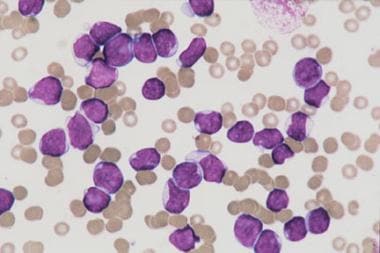
Caption: Picture 2. Bone marrow aspirate from a child with T-cell acute lymphoblastic leukemia. The marrow is replaced with lymphoblasts of various sizes. No myeloid or erythroid precursors are seen. Megakaryocytes are absent.
Click to see larger pictureClick to see detailView Full Size Image
Click to ZoomeMedicine Zoom View (Interactive!)
Picture Type: Photo
Caption: Picture 3. Bone marrow aspirate from a child with B-cell acute lymphoblastic leukemia. The lymphoblasts are large and have basophilic cytoplasm with prominent vacuoles.

Click to see larger pictureClick to see detailView Full Size Image
Click to ZoomeMedicine Zoom View (Interactive!)
Picture Type: Photo
BIBLIOGRAPHY Section 12 of 12   Click here to go to the next section in this topic Click here to go to the top of this page

NOTE:
Medicine is a constantly changing science and not all therapies are clearly established. New research changes drug and treatment therapies daily. The authors, editors, and publisher of this journal have used their best efforts to provide information that is up-to-date and accurate and is generally accepted within medical standards at the time of publication. However, as medical science is constantly changing and human error is always possible, the authors, editors, and publisher or any other party involved with the publication of this article do not warrant the information in this article is accurate or complete, nor are they responsible for omissions or errors in the article or for the results of using this information. The reader should confirm the information in this article from other sources prior to use. In particular, all drug doses, indications, and contraindications should be confirmed in the package insert. FULL DISCLAIMER
eMedicine Journal, July 11 2006, VOLUME 7, Number 7
© Copyright 2001, eMedicine.com, Inc.

eMedicine Journals > Pediatrics > Oncology > Acute Lymphoblastic Leukemia
Please email us with any comments you have on our new chapter format.
 
Use the our online Merriam-Webster medical dictionary.