eMedicine Journal
>
Pediatrics
>
Endocrinology
Growth Failure
Synonyms, Key Words, and Related Terms: slow growth velocity, short stature, growth hormone, GH, GH secretion, growth hormone–releasing hormone, GHRH, growth hormone–releasing peptide, GHRP, ghrelin, growth deficiency, GH deficiency, delayed puberty, slow growth velocity, idiopathic short stature, ISS
|
|
|
 | AUTHOR INFORMATION
| Section 1 of 11  |
Authored by Stephen Kemp, MD, PhD, Professor, Department of Pediatrics, Section of Pediatric Endocrinology, University of Arkansas and Arkansas Children's Hospital
Coauthored by Neslihan Güngör, MD, Instructor, Department of Pediatrics, Section of Endocrinology, Children's Hospital of Pittsburgh and University of Pittsburgh
Stephen Kemp, MD, PhD, is a member of the following medical societies:
American Academy of Pediatrics,
American Association of Clinical Endocrinologists,
American Pediatric Society,
Endocrine Society,
Phi Beta Kappa,
Southern Medical Association, and
Southern Society for Pediatric Research
Edited by Thomas A Wilson, MD, Professor of Clinical Pediatrics, Department of Pediatrics; Director of Pediatric Endocrinology, Division of Pediatric Endocrinology, Department of Pediatrics, State University of New York at Stony Brook; Mary L Windle, PharmD, Adjunct Assistant Professor, University of Nebraska Medical Center College of Pharmacy, Pharmacy Editor, eMedicine.com, Inc;
George P Chrousos, MD, FAAP, MACP, MACE, Professor and Chair, Department of Pediatrics, Athens University Medical School;
Merrily P M Poth, MD, Professor, Department of Pediatrics and Neuroscience, Uniformed Services University of the Health Sciences;
and Bruce A Buehler, MD, Professor, Department of Pathology and Microbiology, Chairman, Department of Pediatrics, Director, Hattie B Munroe Center for Human Genetics, University of Nebraska Medical Center
eMedicine Journal, July 7 2005, VOLUME 6,
Number 7
 | INTRODUCTION
| Section 2 of 11  |
Background: Short stature may be the normal expression of genetic potential, in which case the growth rate is normal, or it may be the result of a condition causing growth failure with a lower-than-normal growth rate. Growth failure is the term that describes a growth rate below the appropriate growth velocity for age.
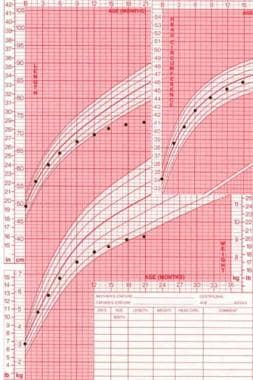
A child is considered short if he or she has a height that is below the fifth percentile; alternatively, some define short stature as height less than 2 standard deviations below the mean, which is near the third percentile. Thus, 3-5% of all children are considered short. Many of these children actually have normal growth velocity. These short children include those with familial short stature or constitutional delay in growth and maturation. In order to maintain the same height percentile on the growth chart, growth velocity must be at least at the 25th percentile. When considering all children with short stature, only a few actually have a specific treatable diagnosis. Most of these are children with a slow growth velocity.
Pathophysiology: The most rapid phase of human growth is intrauterine. Following birth, a gradual decline in growth rate occurs over the first several years of life. The average length of an infant at birth is about 20 inches, the length at 1 year is approximately 30 inches, the length at 2 years is approximately 35 inches, and the length at 3 years is approximately 38 inches. After age 3 years, linear growth proceeds at the relatively constant rate of 2 inches per year (5 cm/y) until puberty.
Normal growth is the result of the proper interaction of genetic, nutritional, metabolic, and endocrine factors. To a large extent, growth potential is determined by polygenic inheritance, which is reflected in the heights of parents and relatives. Secretion of growth hormone (GH) by the pituitary is stimulated by growth hormone–releasing hormone (GHRH) from the hypothalamus. Another signal, which is stimulated by certain growth hormone–releasing peptides (GHRPs), may exist; the receptor for the GHRPs has been identified, but a possible natural ligand for these receptors has been determined recently (see below). Somatostatin secreted by the hypothalamus inhibits GH secretion.
When GH pulses are secreted into the systemic circulation, insulinlike growth factor (IGF)–1 is released, either locally or at the site of the growing bone. GH circulates bound to a specific binding protein (GHBP), which is the extracellular portion of the GH receptor. IGF-1 circulates bound to one of several binding proteins (IGFBPs). The IGFBP that is most dependent upon GH is IGFBP-3.
Recently, a new peptide hormone that stimulates GH release, named ghrelin (from the word ghre, a root word in Proto-Indo-European languages for grow), has been described. This hormone is unique in that it is a small polypeptide modified at the third amino acid (serine) by esterification of n-octanoic acid. Ghrelin appears to be made in the stomach and stimulates GH secretion by binding with its own receptor, which had previously been known to bind synthetic GHRPs. Ghrelin may play a role in regulation of GH at the hypothalamic level, permitting an adequate energy supply for maintenance, growth, and repair.
Frequency:
- In the US: In 1994, Lindsay et al studied 114,881 school children in Utah. After 1 year, 79,495 of the original group were available for evaluation. Of these, 555 (0.7%) had heights that were below the third percentile and a growth rate that was fewer than 5 cm/y. When examined further, causes for short stature within this group of children included familial short stature (37%), constitutional delay (27%), a combination of familial short stature and constitutional delay (17%), other medical causes (10%), idiopathic short stature (5%), GH deficiency (3%), Turner syndrome (3% of girls), and hypothyroidism (0.5%).
- Internationally: Several studies have been conducted to determine the frequency of various causes of short stature. In 1974, Lacey and Parkin evaluated children in Newcastle upon Tyne in England. They studied 2256 children, of whom 111 were below the third percentile in stature. Of the 98 children that they were able to examine, only 16 had evidence of organic disease causing their short stature. Diagnoses included Down syndrome, cystic fibrosis, chronic renal insufficiency, GH deficiency, juvenile rheumatoid arthritis (treated with glucocorticoid), and Hurler syndrome.
Mortality/Morbidity:
- Short stature has been shown to have far-reaching effects on psychological well-being, including poor academic achievement (despite normal intelligence, healthy family dynamics, and high socioeconomic status) and behavioral problems (eg, anxiety, attention-seeking actions, poor social skills). Morbidity related to the underlying cause of the growth failure may also be present.
- Mortality rates in children with growth failure relate to the underlying cause of the growth failure. Mortality is not related to growth failure itself; rather, it is related only to the cause of the growth failure.
History: History of those with short stature should focus on the following areas:
- Birth weight and birth length: One of the issues in the differential diagnosis is intrauterine growth retardation, which should be apparent from the birth history.
- Parents' heights: In order to evaluate a child's genetic potential, calculation of the sex-adjusted midparental height (ie, target height) is helpful. The sex-adjusted midparental height is calculated by adding 2.5 inches to (for boys) or subtracting 2.5 inches from (for girls) the mean of the parents' heights; it represents the most statistically probable adult height for the child, based on parental contribution. By calculating the percentile for this midparental target height, one can determine at what percentile a child's height is expected to fall.
- Timing of puberty in parents: Constitutional delay in growth and maturation may have a family history. Most mothers can remember their age at menarche (average age, 12-12.5 y). To elicit pubertal history from a father is more difficult because no specific landmark exists. Evidence of delayed puberty may include continuing to grow after high school or not shaving until age 20 years or older.
- Previous growth points
- The most useful part of a workup for growth failure is observing the growth pattern. Previous growth data may be obtained from physicians' offices, schools, or marks that have been kept on a door or wall at home.
- If the growth rate is normal (~ 2 in/y [5 cm/y] from age 3 y to puberty), the cause of the child's short stature is likely 1 of the normal variants, and the child does not actually have growth failure.
- If the growth rate is low, growth failure exists, and a pathological cause for the growth failure is more likely.
- Children with constitutional delay in growth and maturation often appear to be growing slowly just before the pubertal growth spurt; they may be confused with children who have actual growth failure.
- The child's general health: Ruling out a chronic disease or poor nutrition as a cause of growth failure is important. Worldwide, malnutrition is probably the most likely cause of growth failure.
Physical: The following items in the physical examination are targeted toward assessing growth failure:
- Height (or length) and weight: A determination of weight is not difficult; height (standing) or length (lying down) should be measured with care. Using a single steady stadiometer and obtaining more than 1 measurement provides accurate values (see below).
- Taking accurate measurements of length requires attention to the following points:
- An accurate measuring device should be used. For infants, the device should consist of a board with a yardstick attached (or embedded), a stationary head plate, and a movable footplate.
- Stretch the child gently. The heels, buttocks, shoulders, and the back of the head should touch the base of the device, and the soles of the feet should be perpendicular to the base of the device.
- Repeating the measurement 2-3 times (and taking an average of these measurements) improves the accuracy of the measurement.
- When taking height measurements, the following should be addressed:
- Always have the child barefoot or in stocking feet. The heels, buttocks, and shoulders should be in contact with the wall or the measuring device.
- The child should be standing with heels together, feet slightly spread.
- The child should look straight ahead. This is called having the head in the Frankfurt horizontal plane, which is a plane represented in the profile by a line between the lowest point on the margin of the orbit and the highest point on the margin of the auditory meatus.
- At the time of the measurement, have the child hold a deep breath.
- Use proper equipment. The ideal device for height measurement is a stadiometer, which may be mounted on the wall, with an arm that moves vertically. The arm is placed on the head, and the height can be read from a counter or from a ruler on the wall. If a stadiometer is not available, good height measurements may be obtained from a yardstick (or meter stick) attached to the wall and a device that makes a right angle with the wall and the child's head. The floppy arm devices mounted on weight scales are inherently variable and frequently yield inaccurate measurements. A height measurement can be determined using this device, but even more attention is required.
- For precise height determinations, measure the child 2-3 times and take the mean. If the first 2 measurements agree, they should be considered accurate.
- In order to minimize diurnal variation in height, always measure the child at the same time of day.
- Proportionality: Inspect the child for proportionality of limbs and trunk. If disproportion is suspected, the following measurements may be taken:
- Arm span: Measure outstretched arms from fingertip to fingertip. In children of European origin, the arm span should approximate the height. In comparisons of people of Asian, European, and African heritage, Asians had proportionally shorter arms, Europeans had intermediate-length arms, and Africans had significantly longer arms.
- Lower segment (LS): Measure from the symphysis pubis to the floor.
- Upper segment (US): Subtract the LS from the height.
- The US/LS ratio is calculated by dividing the US by the LS. In children of European origin, this ratio is about 1.7 at birth and decreases to 1.0 at about age 10, where it remains throughout adulthood. In comparisons of people of Asian, European, and African heritage, Asians had proportionally shorter legs (therefore, larger US/LS ratios), Europeans had intermediate length legs, and Africans had significantly longer legs.
- Pubertal status: Puberty should be staged using the Tanner staging system. In constitutional delay as well as many pathological causes of short stature (including GH deficiency), puberty is delayed.
- Look for signs of specific syndromes: A number of specific syndromes exist that include short stature and slow growth velocity.
- For Turner syndrome, look for webbing of the neck (pterygium colli), a wide carrying angle (cubitus valgus), a low hairline, a high-arched palate, short fourth metacarpals, and multiple nevi.
- Noonan syndrome and Russell-Silver syndrome, among others, should be considered.
- Examine for disproportion of limbs to trunk when considering the possibility of skeletal dysplasias.
- Other syndromes exist as well.
Causes: The following are possible causes of growth failure (slow growth velocity):
- Familial short stature: Children with familial short stature have a history of parents with short stature. They have a normal growth velocity (thus, they do not exhibit true growth failure). Bone age is not delayed. These children have puberty at a normal time and most often finish their growth with a short adult height.
- Constitutional delay in growth and maturation: This entity is sometimes called delayed puberty. Children with constitutional delay have a normal birth weight, and during the first year of life, their growth slows. For most of the period of linear growth (approximately age 3 y to puberty), they maintain an adequate growth velocity. Bone age is usually delayed, and puberty is late, giving a longer time for prepubertal growth, which usually results in a normal adult height. Children with constitutional delay may have a family history of the same. Usually, these children do not exhibit growth failure (a slow growth velocity); however, a period of slow growth velocity usually occurs during the first year of life, and, just before the onset of puberty, growth velocity is again slow (especially when compared to peers who are in the midst of their pubertal growth spurt).
- Malnutrition: Worldwide, malnutrition is probably the most common cause of growth failure and usually is poverty related. In developed countries, nutritional deficiencies more often are the result of self-restricted nutrient intake. Often, poor weight gain is more striking than short stature.
- Chronic disease, systemic disorders
- Nervous system: Microcephaly may be a feature.
- Circulatory system: Cyanotic heart disease may be present.
- Gastrointestinal system: Gluten enteropathy, ulcerative colitis, or regional enteritis (Crohn disease) may be present. In inflammatory bowel disease (in particular, Crohn disease), the growth failure may be apparent before other symptoms appear.
- Liver, chronic renal failure: People with renal tubular acidosis may present with growth failure without any other features.
- Lungs: Cystic fibrosis may be present.
- Connective tissue: Dermatomyositis may be present.
- Psychosocial dwarfism
- Chromosomal abnormalities: In particular, Turner syndrome (45,X) and Down syndrome (trisomy 21) have growth failure as a part of the syndromes. Growth charts specific for these syndromes are available.
- Other syndromes (nonchromosomal): Syndromes that have growth failure as a feature include Noonan syndrome, Russell-Silver syndrome, and Prader-Willi syndrome.
- Target tissue defects
- Intrauterine growth retardation: The category of intrauterine growth retardation describes children who have birth weights less than 5.5 lb at full term or who are small for gestational age (SGA) if born preterm. Numerous etiologies for this condition are contained in this category, including fetal alcohol syndrome and placental insufficiency syndromes. In some of these conditions, spontaneous "catch-up" growth occurs, while in others, growth rate remains slow.
- Bone and cartilage disorders: The most common disorder of bone and cartilage is achondroplasia, which is recognizable by frontal bossing, lumbar lordosis, and short limbs. Other skeletal disorders are less easily recognized, such as hypochondroplasia, which may be diagnosed radiologically. Patients with hypochondroplasia also have short limbs, but the disproportion is subtle and may be apparent only with careful measurements of arm span and US and LS. Both of these disorders are due to mutations of the fibroblast growth factor receptor 3.
- Endocrine causes
- Thyroid hormone deficiency (hypothyroidism): Thyroid hormone is absolutely necessary for normal growth. With hypothyroidism, the growth rate is extremely slow, and with replacement of thyroid hormone, catch-up growth is rapid. Although hypothyroidism is often suspected based on history and physical examination findings, cases also exist in which the signs and symptoms are subtle. Because of the possibility of subtle signs, evaluation of thyroid hormone levels in all children with slow growth is advised.
- GH deficiency: Children who are GH deficient have normal proportions but may appear younger than their age. They have delayed skeletal maturation. Although GH deficiency may be suspected because of damage or malformation of the pituitary gland, in most children diagnosed with GH deficiency, the etiology is idiopathic.
- GH insensitivity (IGF-1 deficiency): Sometimes called Laron dwarfism, this disorder appears to be similar to GH deficiency, except that large amounts of GH are produced but levels of IGF-1 are low. This is a rare condition, except in populations where the gene is present with a greater frequency (eg, in Ecuador).
- Glucocorticoid excess (Cushing syndrome, Cushing disease): Children with glucocorticoid excess almost always have growth failure as part of the presentation.
- Androgen excess: When prepubertal children are exposed to excessive amounts of androgen, the growth velocity increases in the short term, but epiphyseal fusion occurs early, resulting in premature slowing of growth velocity, usually resulting in a short adult height. Causes of androgen excess include exposure to exogenous androgen, precocious puberty, and congenital adrenal hyperplasia.
 | DIFFERENTIALS
| Section 4 of 11  |
Achondroplasia
Constitutional Growth Delay
Hypopituitarism
Hypothyroidism
Laron Syndrome
Noonan Syndrome
Prader-Willi Syndrome
Silver-Russell Syndrome
Skeletal Dysplasia
Turner Syndrome
Other Problems to be Considered:
Glucocorticoid excess (Cushing syndrome), endogenous and exogenous
Lab Studies:
- Thyroxine (T4) and thyroid-stimulating hormone (TSH): T4 and TSH levels are important to rule out hypothyroidism and to screen for panhypopituitarism as a cause for short stature and growth failure.
- Serum electrolytes: A low bicarbonate level may indicate renal tubular acidosis, which can result in growth failure. Electrolyte levels out of the reference range may indicate renal failure. Hypokalemic alkalosis may indicate Bartter syndrome.
- CBC count and sedimentation rate: These tests may be helpful if inflammatory bowel disease is suspected.
- IGF-1 and IGFBP-3: Both IGF-1 and the binding protein IGFBP-3 are GH dependent. Low values suggest GH deficiency. However, they are also sensitive to other factors such as nutritional state, so a low value alone is not diagnostic of GH deficiency.
- Karyotype: Girls with otherwise unexplained short stature should have karyotype determined to rule out Turner syndrome. Although Turner syndrome is diagnosed in many girls from signs present on physical examination, some girls with Turner syndrome have short stature as the only recognizable feature. In particular, girls with mosaic karyotypes or karyotypes with isochromosomes tend to exhibit fewer signs specific to Turner syndrome.
Imaging Studies:
- MRI of the head: Patients who are diagnosed with GH deficiency should undergo MRI of the head to rule out a brain tumor, such as a craniopharyngioma. As many as 10% of children diagnosed with a craniopharyngioma present with growth failure as the only sign. Also, approximately 15% of patients with GH deficiency have an abnormality of the pituitary gland, such as an ectopic bright spot, an empty sella, or a small sella.
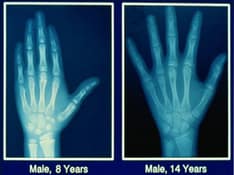
- Bone age determination: A radiograph of the left wrist can be compared to standards to provide an estimation of skeletal maturation. Bone age also provides a determination of growth potential (predicted adult stature may be estimated from the tables of Bayley and Pinneau).
Other Tests:
- GH provocative testing: GH response to insulin is considered the most reliable test for GH deficiency. For recognition of the diagnosis of GH deficiency, many insurance companies require documenting a failure to demonstrate a GH response (with a GH level >10 ng/mL) to 2 provocative stimuli. Provocative stimuli include insulin-induced hypoglycemia, arginine, levodopa (L-dopa), clonidine, and glucagon.
 | TREATMENT
| Section 6 of 11  |
Medical Care: Treatment is directed at the cause of the growth failure. If the child is diagnosed with hypothyroidism, treatment is thyroid hormone replacement. Likewise, if the child is diagnosed with GH deficiency, the treatment is GH replacement therapy. In 2003 the FDA approved the use of GH for children who are not GH deficient but who are at least 2.25 SD below the mean for height, unlikely to have an adult height above -2SD, and have no explanation for their short stature. This disorder has been termed idiopathic short stature (ISS).
Consultations: Although a primary care physician often initiates the workup, the child is usually referred to an endocrinologist for a more detailed investigation of possible causes for growth failure.
 | MEDICATION
| Section 7 of 11  |
GH is approved by the Food and Drug Administration (FDA) for treatment of growth failure caused by the following: GH deficiency, Turner syndrome, chronic renal insufficiency, intrauterine growth failure with postnatal growth failure, Prader-Willi syndrome, and ISS.
Drug Category: Growth hormones -- These are used for physiologic replacement of GH deficiency and used pharmacologically as a growth-promoting agent for Turner syndrome, chronic renal insufficiency, intrauterine growth failure, and Prader-Willi syndrome.
Drug Name
| Somatotropin (Humatrope, Nutropin AQ, Genotropin) -- Recombinant DNA origin GH. In children whose epiphyses are not yet fused, GH therapy usually results in a significant increase in growth velocity (averaging 10-11 cm/y during the first year of therapy in GH deficiency and 7-9 cm/y during the first year in other disorders). Response wanes each year, but growth velocity continues to be faster than pretreatment rates. |
|---|
| Adult Dose | 0.05-0.10 mg/kg/wk, generally administered as a daily SC injection; one sixth to one fourth of the childhood dose |
|---|
| Pediatric Dose | 0.18-0.375 mg/kg/wk SC divided into 6-7 injections; FDA has approved doses as high as 0.7 mg/kg/wk during puberty |
|---|
| Contraindications | Documented hypersensitivity; acute critical illness due to complication following open heart or abdominal surgery or multiple accidental traumas; acute respiratory failure; closed epiphyses; active neoplasia |
|---|
| Interactions | Excessive glucocorticoid therapy inhibits the growth-promoting effect |
|---|
|
Pregnancy
|
C - Safety for use during pregnancy has not been established.
|
| Precautions | GH therapy in patients with functioning renal allografts is not indicated; insulin dose may require adjustment in patients with diabetes mellitus when GH therapy is initiated; progression of scoliosis can occur in patients who experience rapid growth; discontinue use if neoplasia develops |
|---|
Drug Category: Androgens -- Oxandrolone, along with GH, has been used in Turner syndrome to potentiate the growth-promoting effect of GH.Drug Name
| Oxandrolone acetate (Oxandrin) -- Synthetic testosterone derivative. A weak androgen that cannot be aromatized to estrogen. |
|---|
| Adult Dose | 2.5 mg PO bid-qid |
|---|
| Pediatric Dose | 0.1 mg/kg PO qd |
|---|
| Contraindications | Documented hypersensitivity; known or suspected carcinoma of the prostate or breast; carcinoma of the breast in females with hypercalcemia; nephrosis; hypercalcemia |
|---|
| Interactions | May inhibit the metabolism of PO hypoglycemic agents |
|---|
|
Pregnancy
|
X - Contraindicated in pregnancy
|
| Precautions | Women should look for signs of virilization; may increase edema with concomitant administration of glucocorticoid or ACTH; may decrease levels of T4-binding globulin, resulting in decrease total T4 serum levels but normal free T4 levels |
|---|
 | FOLLOW-UP
| Section 8 of 11  |
Further Outpatient Care:
- While the cause of growth failure is being investigated, most practitioners prefer to reevaluate patients at intervals of 3 months. This amount of time also permits repeated growth measurements, which then allows an estimation of growth velocity.
Prognosis:
- Prognosis for adult stature is dependent upon the cause of the growth failure. Initiating therapeutic intervention is important before the patient has closure of the epiphyses with the concomitant finishing of the growth process. If a diagnosis of hypothyroidism or GH deficiency is made, replacement of the deficient hormone usually results in a period of rapid catch-up growth, with subsequent normal growth until epiphyseal fusion.
Patient Education:
 | MISCELLANEOUS
| Section 9 of 11  |
Medical/Legal Pitfalls:
- The most significant medicolegal pitfall is overlooking a CNS tumor with growth failure as its manifestation. Although CNS tumors also often produce neurological symptoms, such as headache with nausea and vomiting or visual changes, 10% of children diagnosed with craniopharyngioma present with growth failure as the only symptom. Importantly, these children are presenting with growth failure (a slow growth velocity) and not just short stature.
- Delayed diagnosis of a treatable cause of growth failure is another pitfall. Once the epiphyses are fused, correction of the cause of the growth failure does not result in further growth.
Special Concerns:
- Children with short stature are frequently teased. Western culture is more accepting of short stature in girls than in boys, a concept that is imbedded in the language. Short girls are often described as petite or cute, while terms used to describe short boys are more often pejorative. Studies of children with GH deficiency have shown that these children tend to have normal intelligence but demonstrate poor school performance. They also tend to have more abnormalities on the child behavior checklist. GH therapy results in improvement.
 | TEST QUESTIONS
| Section 10 of 11  |
CME Question 1: A 9-year-old boy is noted to have a height below the third percentile. His birth weight was 7 lb, and his birth length was 20 inches. The growth chart shows that his height was at the 50th percentile when aged 5 years. He is otherwise healthy and is doing very well in the fourth grade. Which of the following items in the differential is the most likely diagnosis?
A: Constitutional delay in growth and maturation
B: Silver-Russell syndrome
C: Familial short stature
D: Hypothyroidism (acquired)
E: Prader-Willi syndrome
The correct answer is D: This child demonstrates growth failure because his slow growth velocity has caused his height to fall from the 50th to below the third percentile. He is unlikely to have familial (genetic) short stature or constitutional delay in growth and maturation because, in these conditions (even though short stature is present), the growth velocity is normal by the time the individual is aged 5 years. A normal birth weight and length is inconsistent with a diagnosis of Silver-Russell syndrome. By the time children are aged 6 years, those with Prader-Willi syndrome have developmental delay and obesity, which are not present in this case. The diagnosis from the above list that is most consist with the above description is acquired hypothyroidism.
CME Question 2: A 14-year-old girl presents with short stature (height below the third percentile) and delayed puberty. On examination, she has pubic hair (Tanner stage 3) but no breast development and appears healthy without any signs suggesting a specific syndrome. Her thyroid functions and electrolytes are within the reference range, and she responded to levodopa (L-dopa) with a growth hormone (GH) level of 11 ng/mL. Her bone age is 13 years. What is the next step in her workup?
A: A karyotype
B: GH testing with arginine and insulin
C: MRI of the head
D: Determination of intermediates of sex steroid synthesis
E: Thyroid hormone replacement
The correct answer is A: Even though this patient has no obvious signs of Turner syndrome, a karyotype is warranted. Many of the patients with Turner syndrome (especially those presenting at the time of puberty or later) do not have any clinical signs suggesting the syndrome. GH testing is unlikely to be productive because this patient already passed the L-dopa screening test for GH secretion. Without evidence of a pituitary deficiency, an MRI would likely not be helpful. No evidence is present that the pubertal delay in this patient is the result of a defect in steroid biosynthesis. She is not hypothyroid, so no reason exists to begin thyroid hormone replacement therapy.
Pearl Question 1 (T/F): Growth failure without short stature is possible.
The correct answer is True: Growth failure (a slow growth velocity) may cause the height to fall from the 75th to the 25th percentile. Thus, a child with this history is not short, but the growth velocity is sufficiently slow to be concerning.
Pearl Question 2 (T/F): When measuring children, height and length are the same measurement.
The correct answer is False: Length is measured while the patient is lying down and height is measured while standing. A length is slightly longer than height. Length is commonly measured in young children ( <3 y), while heights are often used for those older than 2 years. Plotting lengths and heights on the appropriate growth charts is important.
Pearl Question 3 (T/F): Thyroid hormone deficiency causes growth failure.
The correct answer is True: Normal thyroid hormone activity is necessary for growth. Hypothyroidism causes profound growth failure. Replacement of thyroid hormone in a child with hypothyroidism usually results in dramatic catch-up growth.
Pearl Question 4 (T/F): A child's most probable adult height is at the mean of his or her parents' heights.
The correct answer is False: The most probable adult height for boys is about 2.5 inches above the mean parental height. The most probable adult height for girls is about 2.5 inches below the mean parental height.
 | BIBLIOGRAPHY
| Section 11 of 11 |
-
Carrel AL, Allen DB: Effects of growth hormone on body composition and bone metabolism. Endocrine 2000 Apr; 12(2): 163-72[Medline].
-
Hindmarsh PC, Brook CG: Short stature and growth hormone deficiency. Clin Endocrinol (Oxf) 1995 Aug; 43(2): 133-42[Medline].
-
Hintz RL: Disorders of growth. In: Brunwald E, Fauci AS, Isselbacher KJ, et al, eds. Harrison's Principles of Internal Medicine. 13th ed. New York, NY: McGraw-Hill Medical Publishing Division; 1994.
-
Hintz RL: Growth hormone treatment of idiopathic short stature. Horm Res 1996; 46(4-5): 208-14[Medline].
-
Horner JM, Thorsson AV, Hintz RL: Growth deceleration patterns in children with constitutional short stature: an aid to diagnosis. Pediatrics 1978 Oct; 62(4): 529-34[Medline].
-
Kojima M, Hosoda H, Matsuo H: Ghrelin: discovery of the natural endogenous ligand for the growth hormone secretagogue receptor. Trends Endocrinol Metab 2001 Apr; 12(3): 118-22[Medline].
-
Kojima M, Hosoda H, Date Y: Ghrelin is a growth-hormone-releasing acylated peptide from stomach. Nature 1999 Dec 9; 402(6762): 656-60[Medline].
-
Lacey KA, Parkin JM: Causes of short stature. A community study of children in Newcastle upon Tyne. Lancet 1974 Jan 12; 1(7846): 42-5[Medline].
-
Lindsay R, Feldkamp M, Harris D: Utah Growth Study: growth standards and the prevalence of growth hormone deficiency. J Pediatr 1994 Jul; 125(1): 29-35[Medline].
-
Stabler B, Clopper RR, Siegel PT, et al: Academic achievement and psychological adjustment in short children. The National Cooperative Growth Study. J Dev Behav Pediatr 1994 Feb; 15(1): 1-6[Medline].
-
Stabler B, Siegel PT, Clopper RR, et al: Behavior change after growth hormone treatment of children with short stature. J Pediatr 1998 Sep; 133(3): 366-73[Medline].
-
Tanner JM: Normal growth and techniques of growth assessment. Clin Endocrinol Metab 1986 Aug; 15(3): 411-51[Medline].
-
Tanner JM: Fetus into Man: Physical Growth from Conception to Maturity
. Cambridge, Mass: Harvard University Press; 1990.
| NOTE: |
| Medicine is a constantly changing science and not all therapies are clearly established. New research changes drug and treatment therapies daily. The authors, editors, and publisher of this journal have used their best efforts to provide information that is up-to-date and accurate and is generally accepted within medical standards at the time of publication. However, as medical science is constantly changing and human error is always possible, the authors, editors, and publisher or any other party involved with the publication of this article do not warrant the information in this article is accurate or complete, nor are they responsible for omissions or errors in the article or for the results of using this information. The reader should confirm the information in this article from other sources prior to use. In particular, all drug doses, indications, and contraindications should be confirmed in the package insert. FULL DISCLAIMER |
eMedicine Journal, July 7 2005, VOLUME 6,
Number 7
© Copyright 2001, eMedicine.com, Inc.
|
Please email us with any comments you have on our new chapter format.
|