Use the our online Merriam-Webster medical dictionary.
eMedicine Journal > Pediatrics > Cardiology
Heart Failure, Congestive

Synonyms, Key Words, and Related Terms: congestive heart failure, CHF, congestive heart disease, CHD, heart failure, cardiac failure, cardiac insufficiency, congestive heart failure, myocardial insufficiency, mechanical inadequacy of the heart, left-sided heart failure, right-sided heart failure, compensated heart failure, compensated CHF, decompensated heart failure, decompensated CHF
Author Information | Introduction | Clinical Signs And Symptoms | Differential Diagnoses And Causes Of Chf | Workup | General Treatment And Pharmaceutical Agents | Specific Treatments | Test Questions | Bibliography

AUTHOR INFORMATION Section 1 of 9    Click here to go to the top of this page Click here to go to the next section in this topic

Authored by Gary M Satou, MD, FACC, FAAP, Assistant Professor, Department of Pediatrics, Section of Pediatric Cardiology, New York Medical College; Director of Pediatric Echocardiography, Maria Fareri Children's Hospital at Westchester Medical Center

Coauthored by Gilbert Herzberg, MD, Assistant Professor, Department of Pediatrics, Section of Pediatric Cardiology, New York Medical College; Lars C Erickson, MD, MPH, Associate Professor of Pediatrics, University of Massachusetts Medical School; Consulting Staff, Department of Pediatrics, Division of Pediatric Cardiology, University of Massachusetts Medical Center

Gary M Satou, MD, FACC, FAAP, is a member of the following medical societies: American Academy of Pediatrics, American College of Cardiology, American Heart Association, American Society of Echocardiography, and Society of Pediatric Echocardiography

Edited by Ira H Gessner, MD, Professor, Department of Pediatrics, University of Florida College of Medicine; Mary L Windle, PharmD, Adjunct Assistant Professor, University of Nebraska Medical Center College of Pharmacy, Pharmacy Editor, eMedicine.com, Inc; Ameeta Martin, MD, Associate Professor, Department of Pediatrics, Section of Pediatric Cardiology, University of Nebraska College of Medicine; Gilbert Herzberg, MD, Assistant Professor, Department of Pediatrics, Section of Pediatric Cardiology, New York Medical College; and Steven R Neish, MD, SM, Director of Pediatric Cardiology Fellowship Program, Department of Pediatrics, Baylor College of Medicine, Clinical Director of Pediatric Cardiology, Texas Children's Heart Center, Director, Brown Foundation Heart Clinic, Texas Children's Hospital

Author's Email:Gary M Satou, MD, FACC, FAAPClick here to view conflict-of-interest information on the author of this topic
Editor's Email:Ira H Gessner, MD 

eMedicine Journal, June 26 2006, VOLUME 7, Number 6
INTRODUCTION Section 2 of 9   Click here to go to the next section in this topic Click here to go to the top of this page Click here to go to the next section in this topic

Definition and compensatory mechanisms

Congestive heart failure (CHF) occurs when the heart can no longer meet the metabolic demands of the body at normal physiologic venous pressures. Typically, the heart can respond to increased demands by means of one of the following:

As the demands on the heart outstrip the normal range of physiologic compensatory mechanisms, signs of CHF occur. These signs include tachycardia; venous congestion; high catecholamine levels; and, ultimately, insufficient cardiac output.

Contributory factors

Diminished cardiac output results from a complex interaction of various factors.

Systolic dysfunction is characterized by diminished ventricular contractility resulting in an impaired ability to increase the stroke volume to meet systemic demands. Factors such as anatomic stresses (eg, coarctation of the aorta) that contribute to an increased afterload (end-systolic wall stress) and those resulting from neurohormonal factors that increase systemic vascular resistance also lead to increased systolic dysfunction.

Diastolic dysfunction results from decreased ventricular compliance, necessitating an increase in venous pressure to maintain adequate ventricular filling. Causes of primary diastolic dysfunction include an anatomic obstruction that prevents ventricular filling (eg, pulmonary venous obstruction), a primary reduction in ventricular compliance (eg, cardiomyopathy, transplant rejection), external constraints (eg, pericardial effusion), and poor hemodynamics after the Fontan procedure (eg, elevated pulmonary vascular resistance).

In chronic heart failure, myocardial cells die from energy starvation, from cytotoxic mechanisms leading to necrosis, or from the acceleration of apoptosis or programmed cell death. Necrosis stimulates fibroblast proliferation, which results in the replacement of myocardial cells with collagen. The loss of myocytes leads to cardiac dilation and an increased afterload and wall tension, which results in further systolic dysfunction. In addition, the loss of mitochondrial mass leads to increased energy starvation.

During acute CHF, the sympathetic nervous system and renin-angiotensin system act to maintain flow and pressure to the vital organs. Increased neurohormonal activity results in increased myocardial contractility, selective peripheral vasoconstriction, salt and fluid retention, and blood pressure maintenance. As a chronic state of failure ensues, these same mechanisms cause adverse effects. The myocardial oxygen demand that exceeds the supply increases because of an increase in the heart rate, in contractility, and in wall stress. Alterations in calcium homeostasis and changes in contractile proteins occur, resulting in a hypertrophic response of the myocytes. Neurohormonal factors may lead to direct cardiotoxicity and necrosis.
CLINICAL SIGNS AND SYMPTOMS Section 3 of 9   Click here to go to the next section in this topic Click here to go to the top of this page Click here to go to the next section in this topic

Irrespective of the etiology, the first manifestation of CHF is usually tachycardia. An obvious exception to this finding occurs in CHF due to a primary bradyarrhythmias or complete heart block. As the severity of CHF increases, signs of venous congestion usually ensue. Left-sided heart failure is generally associated with signs of pulmonary venous congestion, whereas right-sided heart failure is associated with signs of systemic venous congestion. Marked failure of either ventricle, however, can affect the function of the other, leading to systemic and pulmonary venous congestion. Later stages of CHF are characterized by signs and symptoms of low cardiac output. Generally, CHF with normal cardiac output is called compensated CHF, and CHF with inadequate cardiac output is considered decompensated.

Signs of CHF vary with the age of the child. Signs of pulmonary venous congestion in an infant generally include tachypnea, respiratory distress (retractions), grunting, and difficulty with feeding. Often, children with CHF have diaphoresis during feedings, which is possibly related to a catecholamine surge that occurs when they are challenged with eating while in respiratory distress. Right-sided venous congestion is characterized by hepatosplenomegaly and, less frequently, edema or ascites (see below). Jugular venous distention is not a reliable indicator of systemic venous congestion in infants because the jugular veins are difficult to observe. Also, the distance from the right atrium to the angle of the jaw may be no more than 8-10 cm, even when the individual is sitting upright. Uncompensated CHF in an infant primarily manifests as a failure to thrive. In severe cases, the patient's failure to thrive may be followed by signs of renal and hepatic failure.

In older children, left-sided venous congestion causes tachypnea, respiratory distress, and wheezing (cardiac asthma). Right-sided congestion may result in hepatosplenomegaly, jugular venous distention, edema, ascites, and/or pleural effusions. Uncompensated CHF in older children may have fatigue or lower-than-usual energy levels. They may complain of cool extremities, exercise intolerance, dizziness, or syncope. Clinical findings may include hypotension, cool extremities with poor peripheral perfusion, a thready pulse, and decreased urine output. Chemical evidence of renal and liver dysfunction may be present, as well as a diminished level of consciousness. Children with uncompensated CHF, particularly older children, generally have a lower cardiac output than what most experienced clinicians would estimate on the basis of the clinical signs.

Signs and symptoms of CHF include the following:

DIFFERENTIAL DIAGNOSES AND CAUSES OF CHF Section 4 of 9   Click here to go to the next section in this topic Click here to go to the top of this page Click here to go to the next section in this topic

Many classes of disorders can result in increased cardiac demand or impaired cardiac function (see Table 1).

Cardiac causes include arrhythmias (tachycardia or bradycardia), structural heart disease, and myocardial dysfunction (systolic or diastolic).

Noncardiac causes of CHF include processes that increase the preload (volume overload), increase the afterload (hypertension), reduce the oxygen-carrying capacity of the blood (anemia), or increase demand (sepsis). For example, renal failure can result in CHF due to fluid retention and anemia.

The most likely causes of CHF depend on the age of the child. CHF in the fetus, or hydrops, can be detected by performing fetal echocardiography. In this case, CHF may represent underlying anemia (eg, Rh sensitization, fetal-maternal transfusion), arrhythmias (usually supraventricular tachycardia), or myocardial dysfunction (myocarditis or cardiomyopathy). Curiously, structural heart disease is rarely a cause of CHF in the fetus, although it does occur. Atrioventricular valve regurgitation in the fetus is a particularly troubling sign with respect to the prognosis.

Neonates and infants younger than 2 months are the most likely group to present with CHF related to structural heart disease. The systemic or pulmonary circulation is often dependent on the patency of the ductus arteriosus, especially if the patient presents in the first few days of life. In these patients, prompt cardiac evaluation is mandatory. Nonetheless, respiratory illnesses, anemia, and known or suspected infection must be considered and appropriately managed.

In older children, CHF may be caused by left-sided obstructive disease (aortic stenosis or coarctation); myocardial dysfunction (myocarditis or cardiomyopathy); hypertension; renal failure; or, more rarely, arrhythmias or myocardial ischemia. Illicit drugs such as inhaled cocaine and other stimulants are increasingly precipitating causes of CHF in adolescents; therefore, an increased suspicion of drug use is warranted in unexplained CHF. Although CHF in adolescents can be related to structural heart disease, it is usually associated with chronic arrhythmia or acquired heart disease, such as cardiomyopathy.

Table 1. Causes of CHF

Finding
Causes
Cardiac rhythm disorders Complete heart block
Supraventricular tachycardia
Ventricular tachycardia
Sinus node dysfunction
Volume overload Structural heart disease (eg, VSD, PDA, AR, mitral regurgitation, complex cardiac lesions)
Anemia
Sepsis
Pressure overload Structural heart disease (eg, AS, PS, aortic coarctation)
Hypertension
Systolic ventricular dysfunction or failure Myocarditis
Dilated cardiomyopathy
Malnutrition
Ischemia
Diastolic ventricular dysfunction or failure Hypertrophic cardiomyopathy
Restrictive cardiomyopathy
Pericardial or cardiac tamponade

Note: AR indicates aortic regurgitation; AS, aortic stenosis; PDA, patent ductus arteriosus; PS, pulmonary stenosis; and VSD, ventricular septal defect.

WORKUP Section 5 of 9   Click here to go to the next section in this topic Click here to go to the top of this page Click here to go to the next section in this topic

Thorough history taking and physical examination, including an assessment of the upper- and lower-extremity blood pressures, are crucial in the evaluation of an infant or child with CHF.

Appropriate laboratory testing includes assessment of the following: oxygen saturation, complete blood cell count (CBC) and hemoglobin concentration, electrolyte levels, calcium level, BUN level, creatinine level, and renal and hepatic function. The CBC can reveal signs of anemia or infection. The evaluation of serum electrolyte levels in the patient with CHF may demonstrate hyponatremia secondary to water retention. Elevated potassium levels may represent renal compromise or even tissue destruction due to low cardiac output. Significant tissue hypoxia increases the presence of lactic acidosis and depletes the serum bicarbonate level. In more chronic CHF states, reduced renal blood flow may be expressed as increased BUN and creatinine levels.

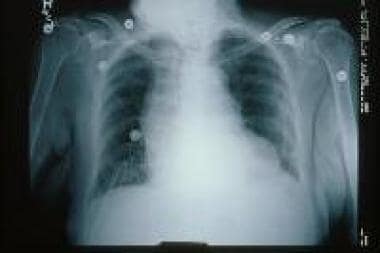
In the presence of CHF, the cardiac silhouette is usually enlarged on the chest radiograph; this finding can be particularly useful in distinguishing patients with CHF from those with a primary respiratory process. The chest radiograph usually depicts cardiac enlargement. However, exceptions may include restrictive cardiomyopathy, venous obstruction (total anomalous pulmonary venous obstruction), and diastolic dysfunction due to high ventilator mean airway pressures. Increased pulmonary blood flow may be present, along with pulmonary edema or venous congestion.

A 12-lead ECG may reveal evidence of structural or coronary artery disease, or a complete atrioventricular block or arrhythmia.

Echocardiography is indicated in any child with unexplained CHF to identify potential cardiovascular causes. On the other hand, CHF itself is not an echocardiographic diagnosis; therefore, the underlying etiology is best identified by means of detailed history taking, physical examination, and often chest radiography. When oral sedation is performed for echocardiography, note that children with a low cardiac output can be dependent on endogenous catecholamine levels to maintain tissue perfusion. Sedation can cause withdrawal of the endogenous catecholamine drive, resulting in cardiac decompensation.

Pulse oximetry, and a hyperoxia test in newborns, may be useful. The systemic saturation on room air is a more reliable measure of oxygenation than observations alone, which are often misleading. The partial pressure of arterial oxygen (PaO2) when the patient is receiving 100% oxygen (hyperoxia test) may help in distinguishing intracardiac mixing malformations from pulmonary disease in the setting of hypoxia. Blood gas abnormalities may show respiratory alkalosis in mild forms of CHF or metabolic acidosis in patients with evidence of low cardiac output or ductal-dependent congenital heart disease.
GENERAL TREATMENT AND PHARMACEUTICAL AGENTS Section 6 of 9   Click here to go to the next section in this topic Click here to go to the top of this page Click here to go to the next section in this topic

The management of CHF is difficult and sometimes dangerous without knowledge of the underlying cause. Consequently, the first priority is acquiring a good understanding of the etiology. The goals of medical therapy for CHF include reducing the preload, enhancing cardiac contractility, reducing the afterload, improving oxygen delivery, and enhancing nutrition. As previously emphasized, the causes of CHF vary, and they appear in different patients to variable degrees. Thus, the medical management of CHF in children should be tailored to the specific details of each case.

Preload reduction can be achieved with oral or intravenous diuretics (eg, furosemide, thiazides, metolazone). Venous dilators (eg, nitroglycerin) can be administered, but their use is rare in common practice. Contractility can be supported with intravenous agents (eg, dopamine) or mixed agents (eg, dobutamine, inamrinone, milrinone). Digoxin appears to have some benefit in CHF, but the exact mechanism is unclear. Afterload reduction is obtained orally by administration of angiotensin-converting enzyme (ACE) inhibitors or intravenously by administration of other agents such as hydralazine, nitroprusside, and alprostadil. Pharmaceutical agents used in the treatment of CHF are summarized in Table 2.

Table 2. Pharmaceutical Agents used in the Treatment of CHF
Agent Pediatric Dose Comment
Preload reduction
Furosemide 1 mg/kg/dose PO or IV May increase to qid
Hydrochlorothiazide 2 mg/kg/d PO divided bid May increase to qid
Metolazone 0.2 mg/kg/dose PO Used with loop diuretic, may increase to bid
Inotropic
Digoxin Preterm infants: 0.005 mg/kg/d PO divided bid or 75% of this dose IV <10 y: 0.010 mg/kg/d PO divided bid or 75% of this dose IV >10 y: 0.005 mg/kg/d PO qd or 75% of this dose IV
Dopamine 5-28 mcg/kg/min IV Gradually titrate upward to desired effect
Dobutamine 5-28 mcg/kg/min IV Gradually titrate upward to desired effect
Inamrinone* 5-10 mcg/kg/min IV Load: 1 mg/kg IV over 2-3 min
Milrinone 0.5-1 mcg/kg/min IV Load: 50 mcg/kg IV slowly over 15 min
Afterload reduction
Captopril 0.1-0.5 mg/kg/d PO divided q8h -
Enalapril 0.1 mg/kg/d PO divided qd/bid, not to exceed 0.5 mg/kg/d Adults: 2.5-5 mg/d PO qd-bid, not to exceed 40 mg/d
Lisinopril Not established Adults: 10 mg PO qd
Nitroprusside 0.5-10 mcg/kg/min IV May need to monitor cyanide level
Alprostadil† 0.05-0.1 mcg/kg/min IV -

Note: IV indicates intravenous; PO indicates oral

*Formerly amrinone.
† Prostaglandin E1.
SPECIFIC TREATMENTS Section 7 of 9   Click here to go to the next section in this topic Click here to go to the top of this page Click here to go to the next section in this topic

Acute CHF in the neonate or infant

Acute presentation of the ill newborn or infant with CHF warrants immediate concern regarding potential sepsis or ductal-dependent congenital heart disease. The evaluation and treatment of these patients are often best performed in the neonatal or pediatric intensive care unit.

The initial management involves the usual assessment of the patient's airway, breathing, and circulation (ABCs); achieving intravenous access; laboratory testing (see Workup) including a blood culture; and empiric antibiotic therapy. Management of low cardiac output can be initiated by using a dopamine infusion at 5-10 mcg/kg/min, acidosis can be corrected with the administration of fluid and/or bicarbonate. Calcium should be administered when hypocalcemia is documented. Because ductal-dependent structural heart disease is a common cause of CHF in early infancy, echocardiography should be considered early in the evaluation if a diagnosis is not immediately forthcoming.

Cardiac lesions that may appear early and that should be considered include coarctation or interruption of the aortic arch, total anomalous pulmonary venous return, hypoplastic left-heart syndrome (or variants of severe mitral valve and/or aortic valve stenosis or atresia), truncus arteriosus, pulmonary atresia, and transposition of the great arteries. More chronic conditions to consider in young infants with CHF include a large VSD, aortopulmonary shunts, and an arteriovenous malformation.

An alprostadil (PGE1) infusion is indicated when ductal-dependent cardiac lesions are diagnosed or when they cannot be ruled out in a timely fashion. Absent femoral pulses or the inability to increase the systemic arterial PaO2 to above 150 mm Hg with a fraction of inspired oxygen (FiO2) of 1 suggests a ductal-dependent lesion, and treatment with PGE1 is warranted.

PGE1 may theoretically aggravate the condition in some children with total anomalous pulmonary venous connection and obstruction or in children with other etiologies of CHF such as sepsis. Whenever possible, echocardiography should be performed before PGE1 treatment is begun. On the other hand, when critical heart disease is present and echocardiography is not immediately available, prostaglandin infusion can be lifesaving.

Nonstructural cardiac problems that occur during this stage include tachyarrhythmias (usually supraventricular tachyarrhythmia [SVT]) and complete heart block. Prompt pharmacologic or electrical cardioversion is warranted in any patient with a tachyarrhythmia who presents with CHF.

Acute CHF in the older child

In older children with acute CHF, admission to the intensive care unit for diuresis with IV furosemide and IV dopamine infusion at a rate of 5-10 mcg/kg/min are appropriate until stabilization is achieved. Older children may require the placement of a central venous catheter to monitor venous pressure and cardiac output during stabilization.

Chronic or stable CHF

If the underlying cause of the CHF cannot be immediately corrected in a patient who is hemodynamically stable, outpatient management can be initiated by using several agents. In mild forms of CHF, digoxin (0.008-0.010 mg/kg/d PO divided bid) and low-dose furosemide (1 mg/kg/dose PO bid) may be initiated.

The dose of digoxin is almost never increased, either for effect or according to digoxin levels, which are notoriously unreliable. However, the dose may be decreased in the presence of signs of toxicity. The suspicion of digoxin toxicity should increase if an infant is uninterested in feedings, gags, or vomits frequently. These symptoms are typically due to an overdose or renal failure.

For more severe CHF, diuretic therapy with oral furosemide may be increased to 2 mg/kg/dose PO 3 times a day, or a second agent, such as hydrochlorothiazide or metolazone, can be added. To be most effective, hydrochlorothiazide and metolazone are best administered simultaneously with furosemide to achieve their synergistic effect. Afterload reduction is indicated in patients who have large left-to-right shunts at the ventricular or arterial level (ventricular septal defect or patent ductus arteriosus), left-sided regurgitant lesions (aortic insufficiency or mitral regurgitation), or poor systolic function (myocarditis or dilated cardiomyopathy). ACE inhibitors are the medications of choice. In any patient taking more than 1 mg/kg of oral furosemide twice a day without ACE inhibitors, spironolactone should be added for its potassium-sparing effect. Alternatively, their serum potassium levels should be monitored, and appropriate supplementation should be provided.

Supplemental potassium chloride may be required when high doses of diuretics are used, but most children are extremely averse to the taste of most preparations. Because ACE inhibitors cause potassium retention, spironolactone and supplemental potassium should be avoided except in the presence of documented hypokalemia in patients taking these medications. Sodium supplementation is almost never indicated in infants or children with CHF except in emergency situations. Severe hyponatremia is generally best managed by reducing the dose of diuretics or by restricting fluid intake, although the latter has little utility in small children. In any child taking more than 2 mg/kg/d of furosemide, electrolyte levels should be checked every few months or so, as in any child taking furosemide in conjunction with other diuretics or ACE inhibitors.

Recently, experience with beta-blocker therapy in pediatric patients has increased. The selective beta1-blocker metoprolol and the nonselective beta1- and beta2-blocker carvedilol, used primarily in adults (but with some published pediatric data available), have generally shown encouraging results in select patients with cardiomyopathy and mild or moderate chronic CHF. An increased ejection fraction has been demonstrated in children and adults using both drugs. Adults using these beta blockers have demonstrated an increased stroke volume and stroke work index during exercise, along with a decreased heart rate and left ventricular (LV) chamber size.

In addition, carvedilol has been shown (primarily in adults) to decrease pulmonary artery mean and wedge pressures, decrease cardiac norepinephrine levels, and increase peripheral vasodilation by means of alpha1-blockade. For these reasons, in part, increased use of carvedilol has progressed in recent years, particularly in cardiomyopathies. However, indications and endpoints are not precise, and, in fact, a recent double-blind randomized trial (carvedilol vs placebo) failed to demonstrate a benefit in reduction of symptoms or mortality. Thus, the exact indications and benefits of carvedilol therapy in children with heart failure remain somewhat unclear.

Nutrition is crucial in the management of chronic CHF. Particularly during infancy, CHF increases the metabolic demands while making feeding itself more difficult. Enhanced caloric content feedings and, in some cases, nasogastric or gastrostomy feedings may be necessary to maintain the patient's growth.

Often overlooked in the management of chronic CHF is the role of the oxygen-carrying capacity of the blood. Anemia aggravates CHF by increasing the demands for cardiac output, and often, careful attention to iron stores or the administration of red cell transfusions results in a significant improvement.

The success of medical therapy of CHF in infants and small children is judged according to the child's growth. The failure to gain weight in the setting of marked CHF signifies that the current regimen is not sufficient. A failure to thrive is an indication for increased medical management or, when the option exists, surgical repair of structural heart disease.

Patient education

For excellent patient education resources, visit eMedicine’s Heart Center. Also, see eMedicine’s patient education article Congestive Heart Failure.
TEST QUESTIONS Section 8 of 9   Click here to go to the next section in this topic Click here to go to the top of this page Click here to go to the next section in this topic

CME Question 1: A 5-day-old newborn presents to the emergency department with lethargy, a history of poor feeding, and decreased urine output for the past 24 hours. The physical examination reveals hepatomegaly, prolonged capillary refill, weak femoral pulses, and a systolic murmur. What test should be performed in the evaluation of this child?


A: Echocardiography
B: Assessment of CBC and serum electrolyte, BUN, and creatine levels
C: Chest radiography
D: Electrocardiography
E: All of the above

The correct answer is E: The infant presented with congestive heart failure (CHF) that occurred after closure of a patent ductus arteriosus and subsequent unmasking of a critical coarctation of the aorta. Echocardiography is the definitive noninvasive diagnostic tool in evaluating children with suspected congenital heart disease. Serologic tests are important, and can reveal disturbances such as bicarbonate depletion, prerenal azotemia, and anemia. Chest radiography can be helpful in determining cardiac positioning (eg, levocardia versus dextrocardia) and the presence of cardiomegaly and pleural effusions. ECG is helpful in identifying potential electrophysiologic abnormalities such as tachycardia or heart block.

CME Question 2: A 2-month-old infant who was born with a large ventricular septal defect presents for a follow-up evaluation. He is thin and has gained little weight from his last visit 1 month ago. His respiratory rate is 70 respirations per minute, and his heart rate is 180 beats per minute. The infant's liver is 4 cm below the costal margin. A loud grade 3/6 systolic murmur is noted along the left sternal border, and a grade 1/6 diastolic rumble is noted at the cardiac apex. What treatment options should not be considered?


A: Digoxin and furosemide (Lasix) therapy
B: Spironolactone (Aldactone) therapy
C: High-calorie diet with possible placement of a nasogastric tube
D: Sodium supplementation
E: Evaluation for anemia and possible red cell transfusion

The correct answer is D: The management of congestive heart failure (CHF) in an infant with a large left-to-right shunt should include therapy with digoxin and Lasix and careful monitoring of electrolyte levels. Often, serum potassium depletion (Lasix effect) occurs, and Aldactone can be helpful as a potassium-sparing agent. Maximizing caloric intake by using either oral feedings (if possible) or nasogastric feedings is essential. If anemia is present, a red cell transfusion can result in significant improvement. Sodium supplementation only enhances fluid retention; therefore it is not recommended in patients with CHF.

Pearl Question 1 (T/F): Structural heart disease is rarely a cause of congestive heart failure (CHF) in the fetus.

The correct answer is True: Although it does occur, structural heart disease is rarely a cause of CHF in the fetus. CHF is often caused by fetal arrhythmias not necessarily related to structural heart disease.

Pearl Question 2 (T/F): Adolescents are the most likely group to present with congestive heart failure (CHF) related to structural heart disease.

The correct answer is False: Neonates and infants younger than 2 months are the most likely group to present with CHF related to structural heart disease. Although CHF in adolescents can be related to structural heart disease, it is usually associated with chronic arrhythmia or acquired heart disease, such as cardiomyopathy.

Pearl Question 3 (T/F): Beta-blockers such as carvedilol may be effective in improving the ejection fraction in some children with cardiomyopathy and congestive heart failure.

The correct answer is True: Findings from several studies suggest that beta-blockers such as carvedilol are beneficial in improving ventricular function in children with dilated cardiomyopathy and congestive heart failure. However, they remain controversial given some recently published data, which suggest that the initial enthusiasm for carvedilol (in particular) is not justified and that no significant reduction in symptoms or mortality were obtained in comparison to placebo.

Pearl Question 4 (T/F): One of the first clinical manifestations of congestive heart failure (CHF) is prolonged capillary refill.

The correct answer is False: Irrespective of etiology, the first manifestation of CHF is usually tachycardia. An exception to this finding occurs in CHF due to primary bradyarrhythmias or complete heart block. Signs and symptoms of low cardiac output, such as hypotension and poor capillary refill, are late manifestations of CHF.
BIBLIOGRAPHY Section 9 of 9   Click here to go to the next section in this topic Click here to go to the top of this page

NOTE:
Medicine is a constantly changing science and not all therapies are clearly established. New research changes drug and treatment therapies daily. The authors, editors, and publisher of this journal have used their best efforts to provide information that is up-to-date and accurate and is generally accepted within medical standards at the time of publication. However, as medical science is constantly changing and human error is always possible, the authors, editors, and publisher or any other party involved with the publication of this article do not warrant the information in this article is accurate or complete, nor are they responsible for omissions or errors in the article or for the results of using this information. The reader should confirm the information in this article from other sources prior to use. In particular, all drug doses, indications, and contraindications should be confirmed in the package insert. FULL DISCLAIMER
eMedicine Journal, June 26 2006, VOLUME 7, Number 6
© Copyright 2001, eMedicine.com, Inc.

eMedicine Journals > Pediatrics > Cardiology > Heart Failure, Congestive
Please email us with any comments you have on our new chapter format.
 
Use the our online Merriam-Webster medical dictionary.