Use the our online Merriam-Webster medical dictionary.
eMedicine Journal > Neurology > Inflammatory And Demyelinating Diseases
Systemic Lupus Erythematosus

Synonyms, Key Words, and Related Terms: SLE, lupus, connective tissue disorder, autoimmunity
Author Information | Introduction | Clinical | Differentials | Workup | Treatment | Medication | Follow-up | Miscellaneous | Test Questions | Pictures | Bibliography

AUTHOR INFORMATION Section 1 of 12    Click here to go to the top of this page Click here to go to the next section in this topic

Authored by James Santiago Grisolia, MD, Chairman, Department of Internal Medicine, Section of Neurology, Scripps Mercy Hospital; Assistant Clinical Professor, Department of Neurosciences, University of California at San Diego

James Santiago Grisolia, MD, is a member of the following medical societies: American Academy of Neurology, American Epilepsy Society, American Medical Association, and California Medical Association

Edited by Thomas A Kent, MD, Chief of Neurology, Houston Veteran Affairs Medical Center; Professor, Department of Neurology, Baylor College of Medicine, Michael E DeBakey VA Medical Center Stroke Program; Francisco Talavera, PharmD, PhD, Senior Pharmacy Editor, eMedicine; Florian P Thomas, MD, MA, PhD, DrMed, Associate Chief of Staff, St Louis VA Medical Center; Associate Director, Neurology Residency Program; Professor, Departments of Neurology, Molecular Virology, and Molecular Microbiology and Immunology, Saint Louis University School of Medicine; Selim R Benbadis, MD, Professor of Neurology, Director of Comprehensive Epilepsy Program, Departments of Neurology and Neurosurgery, University of South Florida College of Medicine, Tampa General Hospital; and Nicholas Lorenzo, MD, Chief Editor, eMedicine Neurology; Consulting Staff, Neurology Specialists and Consultants

Author's Email:James Santiago Grisolia, MDClick here to view conflict-of-interest information on the author of this topic
Editor's Email:Thomas A Kent, MD 

eMedicine Journal, March 28 2005, VOLUME 6, Number 3
INTRODUCTION Section 2 of 12   Click here to go to the next section in this topic Click here to go to the top of this page Click here to go to the next section in this topic

Background: Systemic lupus erythematosus (SLE) is an autoimmune disorder that affects many organ systems, including the central and peripheral nervous systems and muscles. SLE is in the differential diagnosis for many neurological conditions. A variety of neurologic complications may arise in patients with known SLE.

Pathophysiology:

General principles

The pathophysiology of SLE has not been defined fully, although many genes that affect immune function, particularly the human leukocyte antigen (HLA), may augment susceptibility to clinical disease. Most monozygotic (identical) twins are discordant for clinical SLE, strongly suggesting that additional factors, probably environmental, trigger the widespread development of autoimmunity in susceptible individuals.

Certain medications (eg, phenytoin, hydralazine, procainamide, and isoniazid) may produce drug-induced lupus, but this disorder differs from classic SLE in its autoantibody profile (eg, antihistone antibody positive) and in sparing the kidneys and central nervous system (CNS). Once triggered, SLE's autoimmune reaction affects many sites through multiple mechanisms such as deposition of immune complexes, effects of cytokines and other chemical neuromodulators, direct attack by autoantibodies or activated leukocytes, and others.

Non-neurologic sites of damage include the renal glomeruli, joints, pleural or pericardial serosa, integument, cardiac or vascular endothelium, cardiac valves, and the oral and conjunctival mucosa. Multiple sites may be involved within the nervous system.

Organic encephalopathies

Among the neurologic manifestations of SLE, the most common are the organic encephalopathies. These diffuse syndromes correlate poorly with the extent of vasculitis or frank thromboembolism. Functional studies such as positron emission tomography (PET), functional magnetic resonance imaging (MRI), or single photon emission computerized tomography (SPECT) demonstrate patchy areas of dysfunction in brain areas unaffected on conventional MRI, findings that suggest an uncoupling of metabolic processes independent of obstruction to cerebral blood flow. The mechanism of these apparent metabolic alterations is unknown.

In areas of apparent vasculitis, histology demonstrates degenerative changes in small vessel walls, often with minimal or no inflammatory infiltrates. Chronic effects of immune complex deposition offer one potential mechanism for SLE vasculopathy; cytokine-mediated effects on vascular endothelium or local brain parenchyma are another. Inflammatory and noninflammatory SLE vasculopathies may be clinically indistinguishable. The terms cerebritis and vasculitis are well embedded in the literature and will be used in this article, keeping in mind the evolving understanding of the underlying processes.

In addition to small vessel vasculopathy, inflammatory changes may occur in large- to medium-sized vessels, giving a more classic vasculitis, sometimes with clinical stroke syndromes resulting from local thrombosis or artery-to-artery emboli. Other potential stroke etiologies include local thrombosis from antiphospholipid antibodies, which may involve small or medium-sized arteries or veins, including the venous sinuses. Emboli can occur as a result of Libman-Sacks endocarditis (LSE), a sterile endocardial inflammation that produces vegetations on the heart valves, seen in greater frequency in the presence of antiphospholipid antibodies. LSE also may cause a diffuse microembolization pattern that is clinically hard to distinguish from vasculitis or cerebritis. In focal clinical syndromes, overt or covert cardiac emboli are more frequently responsible than focal vasculitic or thrombotic processes.

Antiphospholipid antibodies comprise one category of the multiple autoantibodies that may be associated with SLE. In addition to their association with LSE and local arterial or venous thrombosis, these antibodies also may be associated with a hemorrhagic diathesis, myelopathy, and non-neurologic manifestations such as spontaneous abortion.

Neuromuscular manifestations

Peripheral manifestations of SLE include peripheral nerve injury, myopathy, or disturbances of the neuromuscular junction, which may clinically duplicate myasthenia or myasthenic syndrome. Peripheral neuropathy may result from vasculitic insult to the vasa nervorum (clinically resulting in mononeuritis multiplex or a more confluent polyneuropathy) or from a demyelinating pathology (which clinically results in a chronic sensory or sensorimotor polyneuropathy or, more rarely, in an acute motor presentation resembling acute inflammatory demyelinating polyradiculoneuropathy).

Myopathy in SLE most commonly results from vasculitis of the small vessels feeding the muscle, with pathology reminiscent of dermatomyositis, although on rare occasions the pathophysiology more closely resembles polymyositis with inflammatory involvement of muscle fibers themselves. These findings may be distinguished pathologically from medication-associated myopathy resulting from steroids or hydroxychloroquine sulfate therapy.

Frequency:

Mortality/Morbidity:

Race:

Sex: As with most autoimmune disorders, SLE shows a strong female predominance (as high as 5:1 during childbearing years).

Age: All age groups are affected; however, peak incidence is in young adulthood. Clinical onset often coincides with menarche, pregnancy, postpartum, or menopause.
CLINICAL Section 3 of 12   Click here to go to the next section in this topic Click here to go to the top of this page Click here to go to the next section in this topic

History:

Physical:

Causes: As with most autoimmune disorders, the cause of SLE is unknown. Sex, genetic, and other risk factors are discussed in the Introduction.
DIFFERENTIALS Section 4 of 12   Click here to go to the next section in this topic Click here to go to the top of this page Click here to go to the next section in this topic

Acute Disseminated Encephalomyelitis
Acute Inflammatory Demyelinating Polyradiculoneuropathy
Blood Dyscrasias and Stroke
Brainstem Gliomas
Cardioembolic Stroke
Chorea in Adults
Chronic Inflammatory Demyelinating Polyradiculoneuropathy
Confusional States and Acute Memory Disorders
Dermatomyositis/Polymyositis
Diffuse Sclerosis
Endocrine Myopathies
HIV-1 Associated CNS Complications (Overview)
Intracranial Hemorrhage
Lambert-Eaton Myasthenic Syndrome
Lyme Disease
Metabolic Myopathies
Myasthenia Gravis
Neurological Sequelae of Infectious Endocarditis
Polyarteritis Nodosa
Spinal Cord Infarction
Sudden Visual Loss
Temporal/Giant Cell Arteritis
Vasculitic Neuropathy


Other Problems to be Considered:

Aseptic meningitis
Devic syndrome
Abducens (VI) nerve palsy
Granulomatous angiitis of the central nervous system
Neuromuscular diseases

WORKUP Section 5 of 12   Click here to go to the next section in this topic Click here to go to the top of this page Click here to go to the next section in this topic

Lab Studies:

Imaging Studies:

Other Tests:

Procedures:

Histologic Findings: In nerve biopsies, active necrotizing vasculitis may involve epineurial arterioles. Often perivascular infiltrates are found without frank arterial necrosis. Immunofluorescent staining may demonstrate immunoglobulin or complement deposition on vessel walls.

At times, the only findings are nonspecific demyelination or nerve fiber dropout.

Muscle biopsy most commonly reveals similar findings, emphasizing vascular and perivascular inflammation, similar to the muscle pathology in dermatomyositis. Less frequently, a pathology analogous to classic polymyositis is found, with inflammatory and other changes centered more on the muscle fibers, including frank necrosis, phagocytosis, and degeneration and regeneration of type I and II fibers.

Brain biopsy may demonstrate the protean findings of opportunistic infections or neoplasm, but uncomplicated SLE cerebritis typically demonstrates the small vessel vasculopathy discussed in Organic encephalopathies, with or without an inflammatory infiltrate. Since much of clinically apparent so-called cerebritis proves to result from cardiac embolism, typical findings of acute, subacute, or chronic embolic infarction may be found.

TREATMENT Section 6 of 12   Click here to go to the next section in this topic Click here to go to the top of this page Click here to go to the next section in this topic

Medical Care: Treatment of SLE should be provided in cooperation with a consulting rheumatologist. Therapeutic intensity correlates with the severity of an acute attack. NSAIDs and other symptomatic agents are used for less threatening symptoms. Corticosteroids are used in low-dose oral, high-dose oral, or high-dose IV regimens according to the severity of potential organ damage.

Clinical studies supporting this approach were generally performed in lupus nephritis because of its frequency, severity, and quantifiable improvement or deterioration, but the same treatment approaches are generally applied to other organ systems, including the central and peripheral nervous systems and muscular disease. This overall treatment approach should be familiar to neurologists who are accustomed to the evaluation and treatment of other autoimmune conditions such as multiple sclerosis, myasthenia gravis, or polymyositis.

Consultations:

Diet: A special diet may be required for renal, cardiac, or SLE complications but is generally not required for the neurologic aspects of SLE.

Activity:

MEDICATION Section 7 of 12   Click here to go to the next section in this topic Click here to go to the top of this page Click here to go to the next section in this topic

The goal of therapy is to suppress the autoimmune activity.

Drug Category: Immunosuppressants -- Used for disease modification and reduction of organ-threatening or life-threatening damage. Often needed on acute and chronic bases, these drugs should be used by physicians who are familiar with their use and potential complications (eg, opportunistic infections and common adverse effects).
Drug Name
Methylprednisolone (Solu-Medrol) -- For the most acute or severe manifestations of CNS or PNS disease.
Adult Dose1-2 g IV qd for 3-7 d initially, follow with a taper with IV or PO prednisone, depending on the patient's ability to tolerate it PO and other factors
Pediatric Dose30 mg/kg/dose IV, usually qod, up to 6 doses
ContraindicationsDocumented hypersensitivity; uncontrolled infections; uncontrolled GI bleeding; perforated viscus; viral, fungal, or tubercular skin infections.
InteractionsMay affect hepatic metabolism or serum protein binding of other medicines (this effect is least important with short courses and rapid taper); corticosteroid clearance also may decrease when used concurrently with estrogens, when used concomitantly with digoxin, it may increase digitalis toxicity secondary to hypokalemia
Pregnancy C - Safety for use during pregnancy has not been established.
PrecautionsAdverse effects include acute hyperkalemia, hyperglycemia, psychosis, peptic ulcer and gastritis, uncontrolled infection, or frank sepsis; prophylactic GI protection is reasonable; with longer therapy, adrenocortical suppression, aseptic necrosis, cataracts, and osteoporosis may supervene
Drug Name
Prednisone (Deltasone) -- Used for acute CNS or PNS disease that is not deemed sufficiently dangerous to warrant acute IV methylprednisolone. Also used to follow IV therapy for a gradual outpatient taper.
Adult DoseVaries from 20-100 mg PO qd, usually every am or bid, depending on severity of disease. Gradually taper to qod when possible, eventually tapering off entirely (if possible without disease recurrence)
Pediatric Dose0.5-2 mg/kg/d PO qd or bid/qid; taper as disease course permits
ContraindicationsDocumented hypersensitivity; uncontrolled infections; uncontrolled GI bleeding; perforated viscus; viral, fungal, or tubercular skin infections.
InteractionsMay affect hepatic metabolism or serum protein binding of other medicines (this effect is least important with short courses or rapid taper); corticosteroid clearance may also decrease when used concurrently with estrogens; when used concomitantly with digoxin, it may increase digitalis toxicity secondary to hypokalemia
Pregnancy C - Safety for use during pregnancy has not been established.
PrecautionsBecause this formulation is usually used for long-term therapy, chronic issues of GI bleeding, glucose intolerance, osteoporosis, aseptic necrosis, weight gain, and cataract formation become critically important; prophylactic GI protection and calcium supplementation are generally indicated with appropriate coverage for candidal, herpetic, or other infections in selected patients
Drug Name
Cyclophosphamide (Cytoxan, Neosar) -- This antineoplastic agent is used acutely for life-threatening symptoms, generally in combination with IV corticosteroids.
Various PO and IV protocols exist for long-term management of active disease.
Physicians who are comfortable in follow-up of this agent should manage patients.
Adult Dose8-20 mg/kg IV as a single dose for acute disease
0.5 mg/kg/d PO for chronic disease, adjusting the dose for disease modification and blood studies
Pediatric DoseAdminister as in adults
ContraindicationsDocumented hypersensitivity; severely depressed bone marrow function; uncontrolled infections
InteractionsAllopurinol may increase the risk of bleeding or infection and enhance myelosuppressive effects; may potentiate doxorubicin-induced cardiotoxicity; may also potentiate doxorubicin-induced cardiotoxicity; conversely, digoxin serum levels may be reduced; antimicrobial effects of quinolones may be reduced; chloramphenicol may increase cyclophosphamide half-life while decreasing metabolite concentrations; may increase effect of anticoagulants; rate of metabolism and leukopenic activity are increased by chronic administration of high doses of phenobarbital; thiazide diuretics may prolong cyclophosphamide-induced leukopenia and the neuromuscular blockade by inhibiting cholinesterase activity
Pregnancy D - Unsafe in pregnancy
PrecautionsMonitor carefully prn for leukemia, bone marrow suppression, hemorrhagic cystitis, and covert sepsis; other long-term risks include teratogenesis, carcinogenesis, and infertility; clinical monitoring should be accompanied by frequent CBC and urinalysis monitoring, the latter for hematuria
Drug Name
Azathioprine (Imuran) -- Antagonizes purine metabolism and inhibits synthesis of DNA, RNA, and proteins. May decrease proliferation of immune cells, which results in lower autoimmune activity.
Adult Dose1-2 mg/kg/d PO
Pediatric DoseNot established
ContraindicationsDocumented hypersensitivity; low levels of serum thiopurine methyltransferase (TPMT)
InteractionsToxicity increases with allopurinol; concurrent use with ACE inhibitors may induce severe leukopenia; may increase levels of methotrexate metabolites and decrease effects of anticoagulants, neuromuscular blockers, and cyclosporine
Pregnancy D - Unsafe in pregnancy
PrecautionsIncreases risk of neoplasia; caution with liver disease and renal impairment; hematologic toxicities may occur; check TPMT level prior to therapy and follow liver, renal, and hematologic function; pancreatitis rarely associated
Drug Name
Methotrexate (Folex, Rheumatrex) -- Antimetabolite that inhibits dihydrofolate reductase, thereby hindering DNA synthesis and cell reproduction in malignant cells. Satisfactory response seen in 3-6 wk following administration.
Adult Dose10-15 mg PO/IM given once weekly; adjust dose gradually to attain satisfactory response
Pediatric DoseNot established
ContraindicationsDocumented hypersensitivity; alcoholism; hepatic insufficiency; documented immunodeficiency syndromes; preexisting blood dyscrasias (eg, bone marrow hypoplasia, leukopenia, thrombocytopenia, significant anemia); renal insufficiency
InteractionsOral aminoglycosides may decrease absorption and blood levels of concurrent oral methotrexate (MTX); charcoal lowers MTX levels; coadministration with etretinate may increase hepatotoxicity of MTX; folic acid or its derivatives contained in some vitamins may decrease response to MTX; coadministration with NSAIDs may be fatal; indomethacin and phenylbutazone can increase MTX plasma levels; may decrease phenytoin serum levels; probenecid, salicylates, procarbazine, and sulfonamides, including TMP-SMZ, may increase effects and toxicity of MTX; may increase plasma levels of thiopurines
Pregnancy D - Unsafe in pregnancy
PrecautionsMonitor CBCs monthly, and liver and renal function q1-3mo during therapy (monitor more frequently during initial dosing, dose adjustments, or when risk of elevated MTX levels, eg, dehydration); MTX has toxic effects on hematologic, renal, GI, pulmonary, and neurologic systems; discontinue if significant drop in blood counts; aspirin, NSAIDs, or low dose steroids may be administered concomitantly with MTX (possibility of increased toxicity with NSAIDs including salicylates has not been tested)
Drug Category: Antimalarial -- Used as alternative to steroids or as supplements to accelerate steroid taper.
Drug Name
Hydroxychloroquine (Plaquenil) -- Inhibits chemotaxis of eosinophils, locomotion of neutrophils, and impairs complement-dependent antigen-antibody reactions.
Hydroxychloroquine sulfate 200 mg is equivalent to 155 mg hydroxychloroquine base and 250 mg chloroquine phosphate.
Adult Dose100-400 mg PO daily
Pediatric DoseNot established
ContraindicationsDocumented hypersensitivity; psoriasis; retinal and visual field changes attributable to 4-aminoquinolones
InteractionsSerum levels increase with cimetidine; magnesium trisilicate may decrease absorption
Pregnancy C - Safety for use during pregnancy has not been established.
PrecautionsCaution in hepatic disease, G-6-PD deficiency, psoriasis, and porphyria; not recommended for long term in children; perform periodic (6 mo) ophthalmologic examinations; test periodically for muscle weakness
FOLLOW-UP Section 8 of 12   Click here to go to the next section in this topic Click here to go to the top of this page Click here to go to the next section in this topic

In/Out Patient Meds:

Transfer:

Complications:

Prognosis:

Patient Education:

MISCELLANEOUS Section 9 of 12   Click here to go to the next section in this topic Click here to go to the top of this page Click here to go to the next section in this topic

Medical/Legal Pitfalls:

TEST QUESTIONS Section 10 of 12   Click here to go to the next section in this topic Click here to go to the top of this page Click here to go to the next section in this topic

CME Question 1: A 32-year-old woman with known systemic lupus erythematosus (SLE) presents with new onset of generalized seizures. A chemistry panel was normal. She has been loaded with phenytoin. Which of the following would not help in the immediate management of this case?


A: Computed tomography (CT) scan of her head
B: Single photon emission computerized tomography (SPECT) scan of her brain
C: Antinuclear antibody (ANA) and complement studies
D: Lumbar puncture (LP)
E: None of the above

The correct answer is B: SPECT will be least beneficial because it correlates poorly with clinical disease activity. A normal study would not exclude active cerebritis, nor does an abnormal study guarantee active cerebritis at the time of acute presentation. CT is useful to exclude intracerebral hemorrhage, brain abscess, and other mass lesions. LP excludes opportunistic infections and provides some measure of intrathecal lupus activity (eg, cell count, protein, total immunoglobulin G [IgG] or IgG synthesis ratio, oligoclonal bands, antineuronal antibody). Serum ANA and complement studies help determine acute cerebritis (requiring prolonged steroids) versus old scar formation as the cause of the acute seizure (requiring only anticonvulsants, although one may choose to treat initially with steroids while assessing clinical and laboratory parameters of SLE activity).

CME Question 2: A patient known to have systemic lupus erythematosus (SLE) on maintenance prednisone presents with acute confusion. What factors would support a diagnosis of steroid-induced psychosis?


A: Acute rise in antinuclear antibody (ANA) titer over prior baseline
B: Concomitant flare of arthralgias and skin rash
C: Worsening psychosis following increase in chronic steroid dose
D: Confusion responding to antipsychotic medication
E: All of the above

The correct answer is C: Once metabolic, infectious, and toxic factors are eliminated, the usual clinical decision is between psychosis due to steroids and a flare-up of lupus cerebritis. Increasing the steroid dose usually improves symptoms due to disease flare-up but usually worsens a steroid-induced psychosis. Both conditions will respond to symptomatic treatment with antipsychotics. Worsening in rash, arthralgias, or ANA titer supports worsening of disease rather than steroid psychosis.

Pearl Question 1 (T/F): Neurological involvement in systemic lupus erythematosus (SLE) typically spares the neuromuscular system.

The correct answer is False: SLE can affect all levels of the nervous system including the brain, spinal cord, peripheral nerve, neuromuscular junction, and muscle.

Pearl Question 2 (T/F): A patient with seizures has a positive antinuclear antibody (ANA) after starting phenytoin. This may be drug-induced CNS lupus.

The correct answer is True: If the first ANA is drawn long after starting phenytoin, the distinction cannot be made on clinical grounds alone. SLE may first present with isolated seizures. A positive antihistone antibody suggests drug-induced lupus and a positive double stranded DNA antibody suggests true lupus that preceded phenytoin therapy.

Pearl Question 3 (T/F): A patient with systemic lupus erythematosus has diffuse weakness and malaise. This could be a myopathy or disease-related fatigue.

The correct answer is True: Objective proximal weakness and elevated creatine kinase suggest a true myopathy, while a disproportion between the perceived fatigue and muscular effort suggest chronic autoimmune-induced fatigue.

Pearl Question 4 (T/F): A patient with lupus presents with headache, meningismus, and a cerebrospinal fluid (CSF) pleocytosis of 50 WBCs with normal glucose and protein levels. This person is taking only naproxen and muscle relaxants. This is probably an opportunistic infection.

The correct answer is False: This is probably not an opportunistic infection, but this should be checked. Since the patient has only mild disease that does not require immunosuppressant therapy, an opportunistic infection is unlikely. Clinical and CSF presentation favor aseptic meningitis, likely related to nonsteroidal anti-inflammatory drugs. Complete cultures and fungal serologies should be sent in most circumstances, because chronic meningitis may cause serious morbidity with delayed diagnosis.
PICTURES Section 11 of 12   Click here to go to the next section in this topic Click here to go to the top of this page Click here to go to the next section in this topic

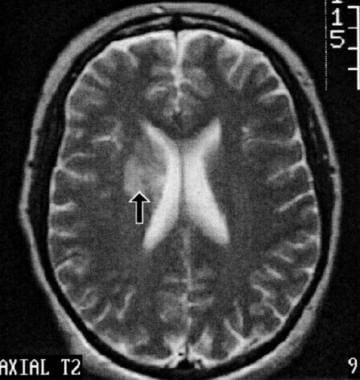
Caption: Picture 1. This axial, T2-weighted brain MRI demonstrates an area of ischemia in the right periventricular white matter of a 41-year-old woman with longstanding systemic lupus erythematosus (SLE). She presented with headache and subtle cognitive impairments but no motor deficits. Faintly increased signal intensity was also seen on T1-weighted images, with a trace of enhancement following gadolinium that is too subtle to show on reproduced images. Distribution of the abnormality is consistent with occlusion of deep penetrating branches, such as may result from local vasculopathy, with no clinical or laboratory evidence of lupus anticoagulant or anticardiolipin antibody. Cardiac embolus from covert Libman-Sacks endocarditis remains less likely due to distribution.
Click to see larger pictureClick to see detailView Full Size Image
Click to ZoomeMedicine Zoom View (Interactive!)
Picture Type: MRI
BIBLIOGRAPHY Section 12 of 12   Click here to go to the next section in this topic Click here to go to the top of this page

NOTE:
Medicine is a constantly changing science and not all therapies are clearly established. New research changes drug and treatment therapies daily. The authors, editors, and publisher of this journal have used their best efforts to provide information that is up-to-date and accurate and is generally accepted within medical standards at the time of publication. However, as medical science is constantly changing and human error is always possible, the authors, editors, and publisher or any other party involved with the publication of this article do not warrant the information in this article is accurate or complete, nor are they responsible for omissions or errors in the article or for the results of using this information. The reader should confirm the information in this article from other sources prior to use. In particular, all drug doses, indications, and contraindications should be confirmed in the package insert. FULL DISCLAIMER
eMedicine Journal, March 28 2005, VOLUME 6, Number 3
© Copyright 2001, eMedicine.com, Inc.

eMedicine Journals > Neurology > Inflammatory And Demyelinating Diseases > Systemic Lupus Erythematosus
Please email us with any comments you have on our new chapter format.
 
Use the our online Merriam-Webster medical dictionary.