Use the our online Merriam-Webster medical dictionary.
eMedicine Journal > Neurology > Neurotoxicology
Organophosphates

Synonyms, Key Words, and Related Terms: nerve agent, pesticides, organophosphate insecticides, diazinon, disulfoton, azinphos-methyl, fonofos, therapeutic use of organophosphates
Author Information | Introduction | Clinical | Differentials | Workup | Treatment | Medication | Follow-up | Miscellaneous | Test Questions | Pictures | Bibliography

AUTHOR INFORMATION Section 1 of 12    Click here to go to the top of this page Click here to go to the next section in this topic

Authored by Frances M Dyro, MD, Chief of the Neuromuscular Section, Associate Professor, Department of Neurology, New York Medical College, Westchester Medical Center

Frances M Dyro, MD, is a member of the following medical societies: American Academy of Neurology, American Association of Neuromuscular and Electrodiagnostic Medicine, and Muscular Dystrophy Association

Edited by Jonathan S Rutchik, MD, MPH, Assistant Professor, Department of Occupational and Environmental Medicine, University of California at San Francisco; Francisco Talavera, PharmD, PhD, Senior Pharmacy Editor, eMedicine; Neil A Busis, MD, Chief, Division of Neurology, Department of Medicine, University of Pittsburgh Medical Center - Shadyside, Clinical Associate Professor, Department of Neurology, University of Pittsburgh School of Medicine; Selim R Benbadis, MD, Professor of Neurology, Director of Comprehensive Epilepsy Program, Departments of Neurology and Neurosurgery, University of South Florida College of Medicine, Tampa General Hospital; and Nicholas Lorenzo, MD, Chief Editor, eMedicine Neurology; Consulting Staff, Neurology Specialists and Consultants

Author's Email:Frances M Dyro, MDClick here to view conflict-of-interest information on the author of this topic
Editor's Email:Jonathan S Rutchik, MD, MPH 

eMedicine Journal, October 11 2006, VOLUME 7, Number 10
INTRODUCTION Section 2 of 12   Click here to go to the next section in this topic Click here to go to the top of this page Click here to go to the next section in this topic

Background: Organophosphates (OPs) are chemical substances originally produced by the reaction of alcohols and phosphoric acid. In the 1930s, they were used as insecticides, but the German military developed these substances as neurotoxins in World War II. They function as cholinesterase inhibitors, thereby affecting neuromuscular transmission.

Organophosphate insecticides, such as diazinon, disulfoton, azinphos-methyl, and fonofos, are used widely in agriculture and in household applications as pesticides. Over 25,000 brands of pesticides are available in the United States, and their use is monitored by the Environmental Protection Agency (EPA). Diazinon has been sold in the United States for 48 years. 14.7 million pounds are sold annually, and it is the most widely used ingredient in lawn and garden sprays in the United States. It is found under the brand names Real Kill, Ortho, and Spectracide.

The EPA reached an agreement with the pesticide industry to end the production of diazinon by March 2001 for indoor use and June 2003 for lawn and garden use. Chlorpyrifos (Dursban) was involved in a negotiated phaseout in June 2000. These phaseouts resulted from recognition of the special risk that these substances posed for children. Four percent of patients presenting to poison control centers report pesticide exposure. Of those patients, 34% are children younger than 6 years.

Toxic nerve agents used by the military are often of the organophosphate group; an example is sarin, the nerve gas used in a terrorist action in Tokyo in 1995. In anticipation of military use of OP neurotoxins during the Gulf War, the US military was given prophylactic agents which some believe caused some of the symptoms of Gulf War syndrome.

With the emergence of the West Nile virus in the northeastern United States, programs of spraying have been implemented in large urban areas, in particular New York's Central Park.

Controversy exists regarding the long-term effects of exposure to low levels of potentially neurotoxic substances.

Therapeutic uses of organophosphates

Several organophosphate agents are being tried therapeutically. Cholinesterase inhibition, which in large doses makes these agents effective pesticides, also may be useful in other doses for treating dementia. Metrifonate has been used to treat schistosomiasis and is undergoing trials for the treatment of primary degenerative dementia.

The organophosphates pyridostigmine and physostigmine are carbamate anticholinesterases that have been used for many years for the treatment of myasthenia gravis. Although the short-duration anticholinesterases are generally safe, reports of their abuse are associated with a picture similar to pesticide intoxication.

One of the author’s patients had been diagnosed erroneously as a myasthenic. Long-term "therapeutic" doses of physostigmine chemically altered her neuromuscular junctions to the point where she had to be slowly weaned from the drug.

Sung and others have reported on the ability of these substances to induce nicotinic receptor modulation. This explains the action of these drugs and may result in development of more effective agents.

Historic and new uses of organophosphates

The first organophosphate was synthesized in 1850. Physostigmine was used to treat glaucoma in the 1870s. By the 1930s, synthetic cholinesterase inhibitors were being used for skeletal muscle and autonomic disorders. Some organophosphates were tried in the treatment of parkinsonism.

In 1986, testing began for tacrine, the first cholinesterase inhibitor to be tried for Alzheimer disease; it was released for clinical use in 1993. The blood-brain barrier has been the limiting factor in developing a cholinesterase inhibitor for use in dementia. A new drug, rivastigmine, is now available. Reported adverse effects are nausea and vomiting, with resultant weight loss because of the increase in cholinergic activity. It has been shown to be useful in mild to moderately severe Alzheimer disease.

Recently, pyridostigmine has been tried for the fatigue of postpolio syndrome. Unfortunately, the study showed no benefit.

Pathophysiology: The mechanism of action, on both target and nontarget species, is irreversible inhibition of acetylcholinesterase (AchE). Acetylcholinesterase is found in red blood cells and in nicotinic and muscarinic receptors in nerve, muscle, and gray matter of the brain. Plasma acetylcholinesterase is found in CNS white matter, pancreas, and heart. It is a hepatic acute phase protein that often is decreased in liver dysfunction, malnutrition, neoplastic disease, pregnancy, and infectious processes as well as in narcotic or cocaine use. Decrease in plasma cholinesterase results in a decrease of cholinesterase activity in the central, parasympathetic, and sympathetic nervous systems.

Organophosphates phosphorylate the serine hydroxyl group at the site of action of acetylcholine. They bind irreversibly, deactivating the esterase and resulting in accumulation of acetylcholine at the endplate. Accumulation of acetylcholine at the neuromuscular junction causes persistent depolarization of skeletal muscle, resulting in weakness and fasciculations. In the central nervous system, neural transmission is disrupted. If this block is not reversed by a strong nucleophile such as pralidoxime (2-PAM) within 24 hours, large amounts of acetylcholinesterase are destroyed. RBC cholinesterase levels rise slowly; about 0.5-1% a day.

Delayed neurotoxicity

Delayed neurotoxicity is produced by certain organophosphorus esters classified as axonopathic. Few of the thousands of organophosphorus agents in the market have been associated with delayed onset of neuropathy. In those that produce neuropathy, effects may result from a single large dose or cumulative doses. Organophosphorus ester-induced delayed neuropathy (OPIDN) takes at least 10 days to develop following a single acute exposure. The effects of cumulative doses occur over a period of weeks following exposure.

Pathologic examination reveals central-peripheral distal axonopathy. Typically, the spinal cord tracts and distal axons of the lower extremities are involved more than the upper extremities. Primary axonopathy is accompanied by secondary demyelination. Sensory and motor fibers are involved. Interestingly, this late toxicity is not a result of acetylcholinesterase inhibition but rather a result of phosphorylation of a receptor protein, neurotoxic esterase, also called neuropathy target esterase (NTE).

Lotti et al described a second step, an "aging" of the phosphoryl-enzyme complex, that is required to produce the neurotoxic effect. Not all organophosphates cause delayed neuropathy. An in vitro test measuring the catalytic activity of this neuron-specific enolase (ie, NTE) may be able to determine the risk of development of delayed neuropathy. Studies in hens given single doses of diazinon or triorthocresyl phosphate (TOCP), showed a "dying back" type of lesion that developed in hens exposed to TOCP but not those exposed to diazinon. Peripheral nerves were affected, and researchers noted moderately severe to marked degeneration of the folia of the cerebellum, the medulla, and spinal cord (the dorsolateral and dorsal columns). TOCP is not a cholinesterase inhibitor.

Frequency:

Mortality/Morbidity: Mortality rate is generally low in patients treated promptly. Morbidity involves the late onset of neuropathy and tremor, and in large doses, convulsions and delirium. Other late effects are less expected. Compston et al reported reduced bone formation after exposure to organophosphates in 80 male agricultural workers. The mechanism of action was thought to be inhibition of acetylcholinesterase in bone matrix. Acetylcholinesterase is expressed by osteoblasts; it is present along cement lines and in osteoid. The author believes that acetylcholinesterase may have a role in the regulation of cell-matrix interactions and in the coupling of bone resorption and formation.

Frequently, the cumulative effects of low doses of organophosphates are neuropsychological. A joint report by the UK Royal College of Physicians and Psychiatrists concluded that a wide range of often-severe symptoms such as excessive fatigue, poor concentration, and suicidal thoughts are reported more frequently in populations exposed repeatedly. Exposed individuals often have a chronic flulike state that improves when exposure ceases. A patient the author saw 3 years after exposure to a single high dose of diazinon was left with significant cognitive impairment and episodes of generalized muscle hypertonia, initially thought to be seizural. Chronic neuropsychological effects have been seen in 4-9% of patients exposed in occupation-related use.

Race: No particular racial susceptibility to organophosphate toxicity has been noted, but the reported incidence is 3-fold greater in African Americans. This may be a result of the predominance of African Americans in the at-risk population.

Menegon et al studied the possibility of genetic predisposition in patients who developed Parkinson disease after pesticide exposure. Glutathione transferase polymorphism was investigated. Glutathione transferase polymorphism 1 (GSTP1) genotypes appeared to be associated with the risk.

Studies by Bhatt et al may confirm the existence of genetic susceptibility. The risk of developing Parkinson disease after long-term pesticide exposure has been reported. Bhatt et al reported 5 cases of acute and reversible parkinsonism due to organophosphate pesticide exposure in India. One patient was a 31-year-old woman who ingested an organophosphate pesticide in a suicide attempt. The other 4 were exposed following household use of pesticides. Typical features of parkinsonism developed in all cases; however, the patients did not respond to levodopa-carbidopa administration. All patients improved when they were removed from the source of the toxin. Surprisingly, atropine, which is used to provide protection against the effect of organophosphates, was used to treat parkinsonism prior to the development of more effective agents.

Sex: Most cases of exposure involve agricultural workers or those involved in pest control; therefore, most reported cases are males.

Age: Age does not appear to be a significant factor, although children exposed to pesticides may absorb relatively more chemical with respect to surface area. Children are also more likely to be exposed to pesticides used in lawn care in the course of play. Exposure to vaporized pesticide in the air, dermal exposure, and placing of pesticide-covered fingers in the mouth increase the routes of exposure.

CLINICAL Section 3 of 12   Click here to go to the next section in this topic Click here to go to the top of this page Click here to go to the next section in this topic

History: Typically, the patient with acute toxic effects of exposure reports being involved in agricultural spraying of crops or the use of pesticides in an enclosed space. Children become ill after playing in areas that have been treated. In the United States, suicidal ingestion is unusual but accidental ingestion by children may result in acute effects. The antihelminthic trichlorfon is used infrequently but may produce symptoms.

Physical: The physical features of short-term and long-term exposure are detailed in History.

Causes: Job-related exposure to organophosphates is the most common cause of toxicity, particularly when care is not taken to use personal protective equipment. Domestic exposure occurs when spraying takes place in an enclosed, unventilated space or skin is exposed during application of a pesticide.
DIFFERENTIALS Section 4 of 12   Click here to go to the next section in this topic Click here to go to the top of this page Click here to go to the next section in this topic

Acute Inflammatory Demyelinating Polyradiculoneuropathy
Assessment of Neuromuscular Transmission
Chronic Inflammatory Demyelinating Polyradiculoneuropathy
Diabetic Neuropathy
Essential Tremor
HIV-1 Associated Distal Painful Sensorimotor Polyneuropathy
HIV-1 Associated Multiple Mononeuropathies
HIV-1 Associated Neuromuscular Complications (Overview)
Myasthenia Gravis
Organic Solvents
Toxic Neuropathy


WORKUP Section 5 of 12   Click here to go to the next section in this topic Click here to go to the top of this page Click here to go to the next section in this topic

Lab Studies:

Imaging Studies:

Other Tests:

Histologic Findings: Nerve biopsy in late-onset neuropathy reveals a primary axonopathy with secondary demyelination. CNS myelin may be lost as well.

TREATMENT Section 6 of 12   Click here to go to the next section in this topic Click here to go to the top of this page Click here to go to the next section in this topic

Medical Care: The patient exposed to organophosphates often arrives at the hospital with cutaneous contamination. The clothing should be removed and discarded. All traces of residue must be removed by careful washing with alkaline soap or bleach solution.

Surgical Care: Surgical care such as tracheotomy and ventilatory assistance generally is not needed unless toxic effects are severe. In late-onset neuropathy, phrenic nerve function may be compromised and the patient may need ventilatory assistance.

Consultations: Consultation should be sought from pulmonary medicine, neurology, and if possible, psychiatry. An agitated patient requiring intubation in the acute phase of treatment can be difficult to control, as sedatives may worsen the condition.

Diet:

Activity:

MEDICATION Section 7 of 12   Click here to go to the next section in this topic Click here to go to the top of this page Click here to go to the next section in this topic

Atropine was used as the sole treatment until oximes were developed; it is still used as the sole treatment in developing countries where oximes are not available. In the United States, oximes are used in mild cases; in more severe cases oximes are augmented by the use of atropine.

In cases of oral ingestion, activated charcoal in suspension may be used if the patient is seen within 30 minutes of ingestion.

Drug Category: Antidotes -- These agents reactivate cholinesterases inactivated by phosphorylation due to exposure to organophosphates.
Drug Name
Pralidoxime chloride (Protopam, 2-PAM chloride) -- Strong nucleophilic agent that reactivates cholinesterase by reversing phosphorylation of serine hydroxyl group at active site of receptor membrane. Should be used within first 12-24 h and may need to be repeated over 2- to 3-week period. One patient in India, who ingested OPs in suicide attempt, required 92 g of pralidoxime over 23-d period. Effective against OP that is not irreversibly bound. Metabolized in liver and excreted in kidney. Early treatment most effective. Half-life 74-77 min. Not effective against carbamates. Should be used in severe OP toxicity.
Adult DoseWhen given with atropine, atropine is given first
Atropine sulfate: 1-5 mg IV after cholinesterase levels measured; may repeat q10-30min until patient fully atropinized (ie, experiencing dry mouth, tachycardia, clearing of tracheobronchial secretions, dilated pupils)
Pralidoxime: 1 g IV over 15-30 min when patient has fasciculations, muscle weakness, or respiratory depression on examination; may be repeated q8-12h for up to 3 doses
Pediatric Dose25-50 mg/kg IV given as 5% solution in isotonic saline; repeat in 12 h if symptoms persist or recur
ContraindicationsDocumented hypersensitivity
InteractionsPotentiates action of barbiturates; antagonism with neostigmine, pyridostigmine, and edrophonium; morphine, theophylline, aminophylline, succinylcholine, reserpine, and phenothiazines can worsen condition of patients poisoned by OP insecticides or nerve agents (do not administer)
Pregnancy C - Safety for use during pregnancy has not been established.
PrecautionsRapid injection can cause tachycardia, laryngospasm, muscle rigidity, pain at injection site, blurred vision, diplopia, impaired accommodation, dizziness, drowsiness, nausea, tachycardia, hypertension, and hyperventilation; can precipitate myasthenia crisis in patients with myasthenia gravis, and muscle rigidity in normal volunteers; decrease in renal function increases drug levels in blood because 2-PAM excreted in urine; can produce transient elevation in CPK; 1 of 6 patients have elevation in SGOT and/or SGPT
Drug Category: Anticholinergic agents -- These agents are used to reduce the clinical manifestations of organophosphate toxicity.
Drug Name
Atropine (AtroPen) -- Antagonizes ACh at muscarinic receptor, leaving nicotinic receptors unaffected. Continue administration until excess muscarinic symptoms improve, which can be gauged by increased ease of breathing in conscious patient or improvement in ease of ventilation of intubated patient.
Adult Dose1-2 mg/dose IV q10-20 min to effect, then q1-4h for 24 h; not to exceed 50 mg in first 24 h (or 2 g over several days if intoxication severe)
Pediatric Dose0.02-0.05 mg/kg IV q10-20 min to effect, then q1-4h for at least 24 h
ContraindicationsDocumented hypersensitivity; thyrotoxicosis; narrow-angle glaucoma; tachycardia
InteractionsOther anticholinergics have additive effects; may increase pharmacologic effects of atenolol and digoxin; may decrease antipsychotic effects of phenothiazines; TCAs with anticholinergic activity may increase effects
Pregnancy C - Safety for use during pregnancy has not been established.
PrecautionsCaution in Down syndrome and/or children with brain damage to prevent hyperreactive response; caution also in coronary heart disease, tachycardia, congestive heart failure, cardiac arrhythmias, hypertension, peritonitis, ulcerative colitis, hepatic disease, and hiatal hernia with reflux esophagitis; in prostatic hypertrophy or prostatism, patients can have dysuria and may require catheterization
FOLLOW-UP Section 8 of 12   Click here to go to the next section in this topic Click here to go to the top of this page Click here to go to the next section in this topic

Further Inpatient Care:

Further Outpatient Care:

In/Out Patient Meds:

Transfer:

Deterrence/Prevention:

Complications:

Prognosis:

Patient Education:

MISCELLANEOUS Section 9 of 12   Click here to go to the next section in this topic Click here to go to the top of this page Click here to go to the next section in this topic

Medical/Legal Pitfalls:

Special Concerns:

TEST QUESTIONS Section 10 of 12   Click here to go to the next section in this topic Click here to go to the top of this page Click here to go to the next section in this topic

CME Question 1: Which statement is true concerning organophosphates?


A: Neuropathy is seen almost immediately after acute exposure to all organophosphate pesticides.
B: Only muscarinic receptors are affected by organophosphates.
C: All organophosphates are capable of producing distal axonal neuropathy.
D: Organophosphate toxicity can affect the phrenic nerve, causing patients to require ventilatory assistance.
E: Organophosphates cannot be absorbed through the skin.

The correct answer is D: One of the major causes of death in organophosphate toxicity is respiratory failure, both central and peripheral in origin. Organophosphates can be absorbed through the skin. They affect both nicotinic and muscarinic receptors. Not all organophosphates are known to cause neuropathy. The neuropathy that occurs is of delayed onset, taking at least 10 days to develop.

CME Question 2: Which of the following conditions is not treated by organophosphate cholinesterase inhibitors?


A: Dementia of the Alzheimer type
B: Schistosomiasis
C: Parkinson disease
D: Postpolio syndrome fatigue
E: Multiple sclerosis

The correct answer is E: The organophosphates have been used to treat a wide variety of medical conditions in which modulation of muscarinic receptors may be helpful. Multiple sclerosis, a disorder of central nervous system myelin, does not involve receptors. Organophosphates have been used to treat schistosomiasis and have been tried for parkinsonism and postpolio syndrome fatigue. Organophosphate use in the dementias is an exciting new application.

Pearl Question 1 (T/F): Development of late organophosphate neuropathy depends on the development of "aged" phosphorylated neuropathy target esterase.

The correct answer is True: The neuropathy occurs about 2-4 weeks after exposure and involves the lower extremities more than the upper extremities. It is the result of phosphorylation of neuropathy target esterase.

Pearl Question 2 (T/F): Phenothiazine-type tranquilizers are the drugs of choice in treatment of agitation and delirium of severe acute organophosphate toxicity.

The correct answer is False: Phenothiazines should be avoided, as should barbiturates, because their effects are potentiated by anticholinesterases. The effects of alkaloids, theophylline, aminophylline, succinylcholine, reserpine, and morphine also are potentiated by anticholinesterases and thus these medications also should be avoided in patients with organophosphate toxicity.

Pearl Question 3 (T/F): The patient with acute organophosphate toxicity presents with nausea, vomiting, excessive lacrimation, pinpoint pupils, and muscle fasciculations.

The correct answer is True: The muscarinic effects cause overactivity of salivary glands, nasal mucosa, and pupillary constrictors and induce bowel and bladder hyperactivity. The nicotinic overactivity results in fasciculations. The author recalls seeing a patient with a picture similar to amyotrophic lateral sclerosis who had worked as a crop duster for many years.

Pearl Question 4 (T/F): Cognitive abnormalities and neuropsychological features are associated with a long-term, cumulative exposure to organophosphates.

The correct answer is True: Several studies have demonstrated neuropsychological abnormalities in people exposed repeatedly to organophosphates.
PICTURES Section 11 of 12   Click here to go to the next section in this topic Click here to go to the top of this page Click here to go to the next section in this topic

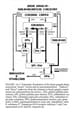
Caption: Picture 1. Chemical Terrorism Agents and Syndromes. Signs and symptoms. Chart courtesy of North Carolina Statewide Program for Infection Control and Epidemiology (SPICE), copyright University of North Carolina at Chapel Hill, www.unc.edu/depts/spice/chemical.html.
Click to see detail
 
 
Picture Type: Image
BIBLIOGRAPHY Section 12 of 12   Click here to go to the next section in this topic Click here to go to the top of this page

NOTE:
Medicine is a constantly changing science and not all therapies are clearly established. New research changes drug and treatment therapies daily. The authors, editors, and publisher of this journal have used their best efforts to provide information that is up-to-date and accurate and is generally accepted within medical standards at the time of publication. However, as medical science is constantly changing and human error is always possible, the authors, editors, and publisher or any other party involved with the publication of this article do not warrant the information in this article is accurate or complete, nor are they responsible for omissions or errors in the article or for the results of using this information. The reader should confirm the information in this article from other sources prior to use. In particular, all drug doses, indications, and contraindications should be confirmed in the package insert. FULL DISCLAIMER
eMedicine Journal, October 11 2006, VOLUME 7, Number 10
© Copyright 2001, eMedicine.com, Inc.

eMedicine Journals > Neurology > Neurotoxicology > Organophosphates
Please email us with any comments you have on our new chapter format.
 
Use the our online Merriam-Webster medical dictionary.